
 Buy Crypto
- Markets
 Futures
- Spot
- Copy Trade
- Earn
- More
Is TradFi Safe to Use in 2026? Exploring Security in Traditional Finance Amid Crypto Integration

As we move deeper into 2026, traditional finance, or TradFi, continues to evolve with blockchain influences, highlighted by events like Binance’s launch of the TSLAUSDT perpetual contract on January 28. This development allows traders to engage with Tesla stock price fluctuations using USDT without owning actual shares, blending TradFi assets with crypto tools. In this article, we’ll examine if TradFi is safe to use, drawing on its regulatory strengths and risks, while providing short-term safety forecasts based on current trends and long-term outlooks for its fusion with Web3. Expect a balanced analysis, including technical insights into risk management and market outlook for safer participation.
Understanding TradFi: What It Means for Safety in 2026
TradFi stands for traditional finance, encompassing banks, stock exchanges, insurance companies, and other centralized institutions that handle everyday financial activities like deposits, loans, and investments. In the crypto world, TradFi often contrasts with decentralized finance (DeFi), where blockchain enables peer-to-peer transactions without intermediaries. According to data from CoinMarketCap extracted on February 11, 2026, the global financial landscape shows TradFi still dominating in scale, with trillions in assets under management, even as crypto markets fluctuate.
This year, TradFi’s safety is under scrutiny as it integrates with blockchain. For instance, BlackRock CEO Larry Fink has stated that “asset tokenization will be the core trend for next-generation markets,” as reported in industry analyses. This fusion, seen in products like BlackRock’s USD Institutional Digital Liquidity Fund (BUIDL), aims to enhance liquidity but raises questions about whether TradFi remains a secure choice. From my experience as a crypto trader, TradFi’s established systems provide a reliable foundation, but users must weigh this against emerging risks in a hybridized financial environment.
Key Safety Features Making TradFi Reliable
TradFi’s safety stems from decades of refinement, offering protections that many crypto beginners appreciate for their stability. Institutions like banks adhere to strict capital adequacy ratios and deposit insurance schemes, ensuring that even if a bank faces issues, customer funds up to certain limits are protected. These measures, enforced by governments worldwide, create a safety net that has prevented widespread losses in stable economies.
Beyond regulations, TradFi employs sophisticated risk management frameworks. Banks conduct thorough credit assessments before issuing loans, monitoring them through stages to minimize defaults. Insurers use actuarial models to predict and cover risks, maintaining solvency. As crypto researcher and analyst at Sygnum Bank noted in their 2026 report, these systems contribute to TradFi’s overall stability, especially when compared to the volatility in DeFi platforms.
Technologically, TradFi invests heavily in safeguards like data encryption and multi-factor authentication for online banking. This prevents breaches that could expose user information. In 2026, with increasing cyber threats, these features make TradFi a go-to for those wary of DeFi’s smart contract vulnerabilities.
Potential Risks: Is TradFi Completely Safe to Use?
While TradFi boasts strong protections, it’s not immune to dangers, particularly systemic ones. Economic downturns can trigger chain reactions, as seen in the 2008 financial crisis where major institutions nearly collapsed, impacting global markets. In 2026, with inflation and geopolitical tensions, similar market fluctuations could amplify these risks, according to forecasts in Sygnum’s industry report predicting diversified national reserves including bitcoin.
Operational risks also linger, such as internal fraud or employee errors leading to data leaks. Isolated incidents, like unauthorized transactions in banks, highlight how human factors can undermine safety. For crypto enthusiasts exploring TradFi-crypto hybrids, this means vigilance is key—always verify institution credentials before engaging.
Technological risks have grown with fintech adoption. System outages or cyberattacks, though rare due to robust defenses, can disrupt services. A recent example is the push toward 24/7 trading in crypto derivatives like TSLAUSDT, which exposes users to constant volatility without the downtime buffers of traditional markets.
To illustrate key differences in safety profiles, here’s a comparison table based on data from CoinMarketCap and Sygnum reports as of February 11, 2026:
| Aspect | TradFi Safety Level | DeFi Safety Level | Key Notes |
|---|---|---|---|
| Regulatory Oversight | High (government-enforced) | Low (self-regulated) | TradFi benefits from legal backups like deposit insurance. |
| Risk Management | Advanced (institutional frameworks) | Variable (smart contracts) | DeFi faces oracle manipulation risks. |
| Technological Security | Strong (encryption, backups) | Moderate (blockchain immutability) | TradFi invests more in cyber defenses. |
| Volatility Exposure | Moderate (market hours limited) | High (24/7 access) | Crypto integrations increase TradFi’s risk in 2026. |
| User Accessibility | Medium (thresholds apply) | High (wallet-based) | TradFi offers stability for beginners. |
This table underscores that while TradFi scores higher in structured safety, its integration with volatile crypto elements demands careful assessment.
TradFi vs. DeFi: Navigating Safety in the Crypto Landscape
In the crypto space, TradFi represents the centralized system DeFi seeks to disrupt, yet both coexist in 2026. DeFi relies on smart contracts for automated, transparent transactions, but it carries risks like code exploits or oracle manipulations that can lead to sudden losses. TradFi, by contrast, depends on intermediaries and regulations, providing higher stability but lower transparency.
CeFi, a hybrid, combines TradFi’s centralization with blockchain efficiency, as seen in platforms offering tokenized real-world assets (RWA). The Sygnum report forecasts that by year’s end, at least three G20 economies may include bitcoin in reserves, signaling TradFi’s adaptation. Crypto analyst Alex Thorn from Galaxy Digital remarked, “TradFi’s regulatory moat makes it safer for mass adoption, but DeFi’s innovation pushes boundaries.” For beginners, starting with TradFi tools like insured bank accounts before venturing into DeFi staking can build confidence.
Emerging Trends: Is TradFi Safe to Use Amid 2026 Innovations?
2026 marks a “melting point” for finance, with TradFi embracing blockchain through RWAs and perpetual contracts. Binance’s TSLAUSDT exemplifies this, tracking Tesla prices via USDT for 24/7, leveraged trading—up to 5x—without owning stocks. This “financial alchemy,” as described in blockchain discussions, expands assets from tangible stocks to abstract values like trading signals, potentially creating new opportunities like initial bot offerings (IBO).
However, risks emerge in these hybrids. Tokenized assets could face bubbles or scams, similar to meme coins’ volatility. Short-term forecast: With stablecoin dominance like USDT as “internet dollars,” TradFi safety remains high for conservative users, but long-term, regulatory uncertainties in crypto fusions may introduce volatility. My advice as a seasoned trader: Diversify across TradFi and DeFi, using tools like WEEX Exchange for secure crypto entry points.
Actionable Insights for Safer TradFi Use in 2026
For crypto beginners, assess TradFi safety by checking regulatory compliance—opt for institutions with strong track records. In hybrids, verify smart contract audits to avoid vulnerabilities. Short-term, monitor market caps via CoinMarketCap for stable assets; long-term, expect more RWA tokenization, boosting liquidity but requiring risk management like setting stop-losses in leveraged trades.
FAQ: Common Questions About TradFi Safety in 2026
Is TradFi safer than DeFi for beginners in 2026?
Yes, TradFi is generally safer due to strict regulations and institutional protections, unlike DeFi’s reliance on potentially vulnerable smart contracts. Beginners should start with TradFi for stability before exploring DeFi staking.
What are the main risks of using TradFi in the crypto era?
Key risks include systemic economic shocks and operational errors, amplified by 2026’s blockchain integrations like RWAs. Always diversify and stay informed via sources like Sygnum reports to mitigate these.
How does TradFi integration with crypto affect its safety?
Integrations like TSLAUSDT perpetual contracts enhance accessibility but introduce volatility and regulatory uncertainties. This fusion improves efficiency, but users must evaluate platform security for safe use.
Is TradFi safe to use for high-leverage trading in 2026?
TradFi hybrids offer leverage, but they carry high risks like funding rate costs and 24/7 exposure. Use them cautiously, starting small, as per CoinMarketCap data showing market fluctuations.
What makes TradFi secure compared to meme coins or NFTs?
TradFi’s security comes from government oversight and risk frameworks, contrasting the high speculation in meme coins. In 2026, this makes TradFi a steadier option for long-term investments.
Can TradFi protect against cyber threats in 2026?
TradFi employs advanced encryption and backups, making it robust against attacks, though no system is foolproof. Pair it with personal security practices for optimal safety.
Looking back on my years trading crypto, I’ve seen TradFi as a sturdy anchor amid market storms, yet its evolving ties to blockchain demand fresh caution. In 2026, safety boils down to informed choices—blend TradFi’s reliability with crypto’s potential, but always prioritize education over hype for sustainable gains.
DISCLAIMER: WEEX and affiliates provide digital asset exchange services, including derivatives and margin trading, only where legal and for eligible users. All content is general information, not financial advice-seek independent advice before trading. Cryptocurrency trading is high risk and may result in total loss. By using WEEX services you accept all related risks and terms. Never invest more than you can afford to lose. See our Terms of Use and Risk Disclosure for details.
You may also like
Introducing Zcash ($ZEC): Protocol Updates and Price Prediction
Zcash is a decentralized cryptocurrency focused on privacy and anonymity. $ZEC has hit everyone’s attention recently.
What is SMC Factory (SMCF) Coin: Everything You Need to Know
SMC Factory (SMCF) is a meme coin inspired by the concept of factory-style production of meme tokens, originating…
Oil Tokenization: Models, Risks, and Real Market Use Cases in 2026
Oil Tokenization is turning crude oil exposure into digital assets, but in 2026 the real divide is between credible, auditable structures and speculative oil-linked tokens with weak backing.

Tether Gold (XAUT): What It Is, How It Works, and Key Risks
What is Tether Gold (XAUT)? Learn how this tokenized gold works on Ethereum, Tron, and BNB Chain, plus fees, reserves, risks, and XAUT vs PAXG.
How to Buy Russian Oil Asset Reserve (ROAR) Crypto: 2026 Step-by-Step Guide
Learn how to buy Russian Oil Asset Reserve (ROAR) crypto on Solana DEXs. Step-by-step guide with contract address, wallet setup, risks, and safety tips.

What is Russian Oil Asset Reserve (ROAR): Is ROAR Crypto Legitimate or a Scam?
What is Russian Oil Asset Reserve (ROAR) crypto? We analyze the Solana meme coin tied to oil narratives, tokenomics, risks, and whether it has real backing.
Russian Oil Asset Reserve (ROAR): Is ROAR Crypto a Hype?
What is Russian Oil Asset Reserve (ROAR) crypto? We analyze the Solana meme coin tied to oil narratives, tokenomics, risks, and whether it has real backing.

What is イロハ (IROHA) Coin: Everything You Need to Know
イロハ (IROHA) is a community-driven meme token on the Solana blockchain, inspired by cultural themes and aiming to…
What is iShares MSCI India (INDAON) Coin
iShares MSCI India (INDAON) is a tokenized version of the iShares MSCI India ETF, created by Ondo Finance…
What is Build N Build (共建) Coin? Everything You Need to Know
Build N Build (共建) Coin represents a community-driven token on the Binance Smart Chain, inspired by a tweet…
What is iShares MSCI EAFE Tokenized ETF (Ondo) (EFAON) Coin
iShares MSCI EAFE Tokenized ETF (Ondo) (EFAON) Introduction iShares MSCI EAFE Tokenized ETF (Ondo) (EFAON) is a tokenized…

WEEX OFC Airdrop Guide: Claim Your New User Bonus and OFC Rewards
Discover how to participate in the WEEX OFC airdrop event from April 9 to April 15, 2026. This guide covers how to maximize your new user bonus, claim free rewards through spot trade tasks, and optimize your trading fees on one of the fastest-growing crypto exchanges.
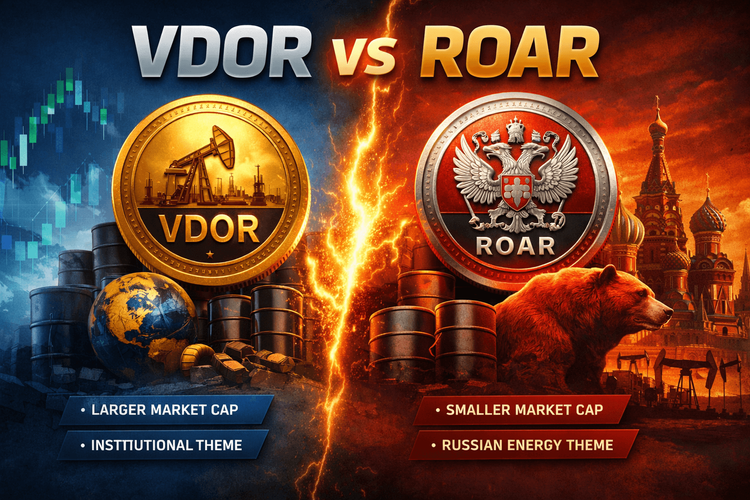
VDOR vs ROAR: Which Oil-Theme Crypto Token Looks Stronger in 2026?
VDOR vs ROAR explained with the latest market data, contract addresses, legitimacy checks, token differences, and which oil-theme crypto looks stronger in 2026.

Is Russian Oil Asset Reserve (ROAR) Legitimate or a Scam?
Is Russian Oil Asset Reserve (ROAR) legitimate? Read the latest ROAR legitimacy check, official contract address, market data, risks, and expert verdict.
What is OneFootball Credits (OFC) Coin
OneFootball Credits (OFC) is a utility token designed to fuel a global fan economy in the football world,…
Where Can I Buy ROAR Crypto? Step-by-Step Guide and Insights
ROAR crypto, the token behind the Russian Oil Asset Reserve project, has caught attention amid shifting global energy…

OneFootball Credits (OFC) Price Prediction & Forecasts for April 2026: Up 8% in 24 Hours Amid Rising Trading Volume
As of April 9, 2026, OneFootball Credits (OFC) is trading at $0.168229 USD, according to data from CoinMarketCap.…

Is Russian Oil Asset Reserve (ROAR) a Good Investment in 2026? Latest Price, Risks, and Everything Buyers Should Know
Is Russian Oil Asset Reserve (ROAR) a good investment? Explore the latest ROAR price, market cap, risks, Solana token details, and expert verdict.
Introducing Zcash ($ZEC): Protocol Updates and Price Prediction
Zcash is a decentralized cryptocurrency focused on privacy and anonymity. $ZEC has hit everyone’s attention recently.
What is SMC Factory (SMCF) Coin: Everything You Need to Know
SMC Factory (SMCF) is a meme coin inspired by the concept of factory-style production of meme tokens, originating…
Oil Tokenization: Models, Risks, and Real Market Use Cases in 2026
Oil Tokenization is turning crude oil exposure into digital assets, but in 2026 the real divide is between credible, auditable structures and speculative oil-linked tokens with weak backing.
Tether Gold (XAUT): What It Is, How It Works, and Key Risks
What is Tether Gold (XAUT)? Learn how this tokenized gold works on Ethereum, Tron, and BNB Chain, plus fees, reserves, risks, and XAUT vs PAXG.
How to Buy Russian Oil Asset Reserve (ROAR) Crypto: 2026 Step-by-Step Guide
Learn how to buy Russian Oil Asset Reserve (ROAR) crypto on Solana DEXs. Step-by-step guide with contract address, wallet setup, risks, and safety tips.
What is Russian Oil Asset Reserve (ROAR): Is ROAR Crypto Legitimate or a Scam?
What is Russian Oil Asset Reserve (ROAR) crypto? We analyze the Solana meme coin tied to oil narratives, tokenomics, risks, and whether it has real backing.


 App
App