Stablecoins in Venezuela and Argentina: Financial Revolution




As traditional financial systems collapse under the weight of hyperinflation and exchange controls, a silent financial revolution is transforming the economy for millions of Latin Americans. Stablecoins, those cryptocurrencies pegged to the value of the US dollar, have ceased to be an alternative and have become the primary financial tool for survival in Venezuela and Argentina. In Venezuela, 34% of retail transactions are already conducted with stablecoins, the highest proportion in all of Latin America. In Argentina, that percentage reaches 31%, while the country leads the region with $91.1 billion in crypto asset value received during 2024.
This massive adoption is not the product of technological enthusiasm or financial speculation. It is the pragmatic response of ordinary people seeking to protect their savings, receive their salaries, and make daily purchases in a context of deep monetary crisis. As explained by Patricio Mesri, Executive Director of Bybit for Latin America, "in Venezuela, stablecoins are not an alternative: for many families and businesses, they are the norm."
Venezuela: When stablecoins replace the national currency
USDT in Venezuela">
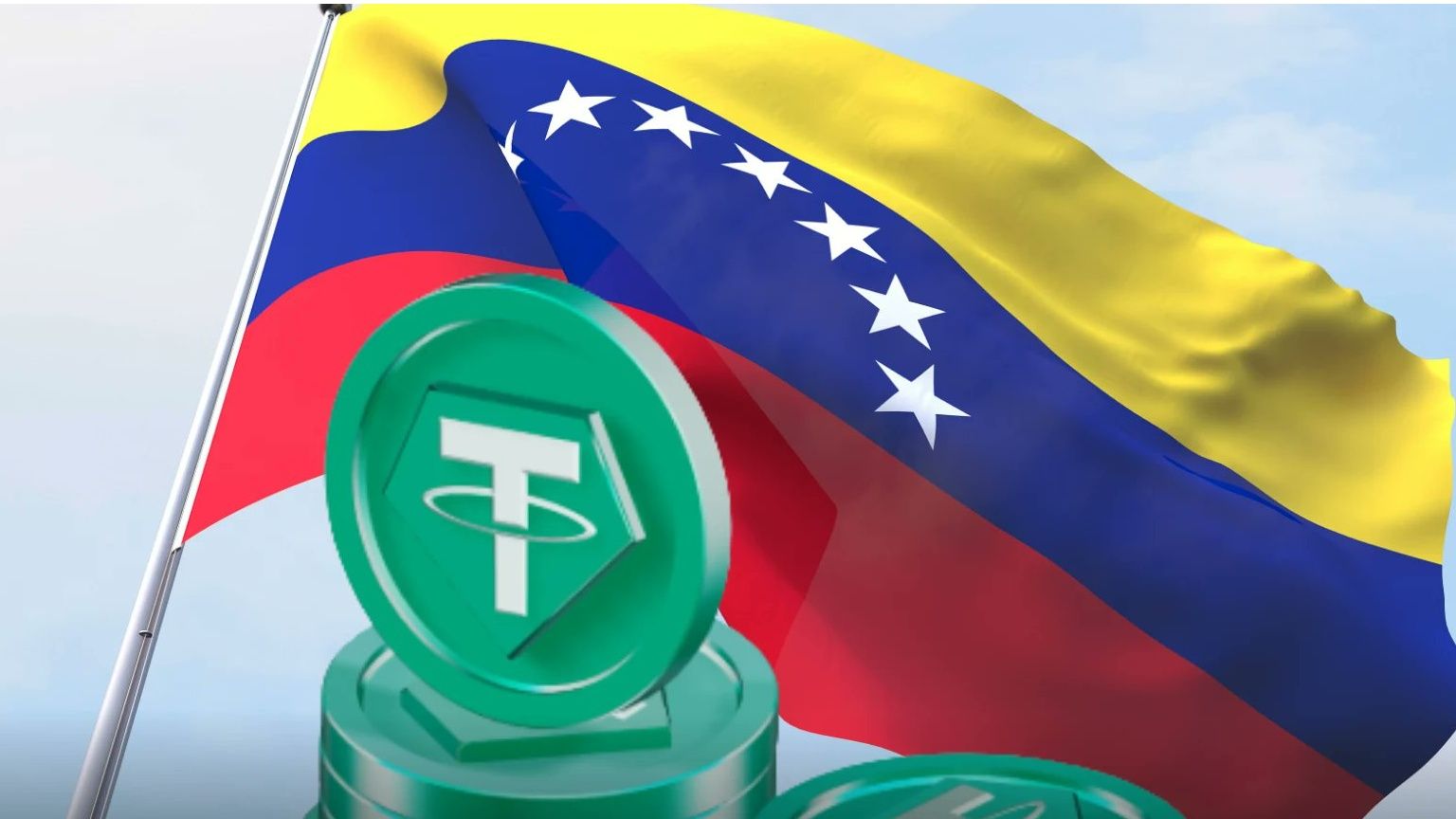
Venezuela has become the most extreme and revealing case study of how stablecoins can completely replace a collapsed national currency. With inflation reaching 229% in 2025 and a bolivar that loses value daily, Venezuelans have found their economic lifeline in USDT (Tether) and USDC.
The daily reality of the "digital dollar"
According to Cointelegraph, there are currently three exchange rates for the US dollar in Venezuela: the official Central Bank rate at 151.57 bolivars per dollar, the parallel market rate at 231.76, and the USDT rate on Binance at 219.62. The latter has become the most widely used among sellers and consumers due to its liquidity and reliability.
As economic analyst Di Bartolomeo explains to Cointelegraph, "individuals and companies prefer to price their goods and services in USD and receive payment for them in USD." USDT now functions as a better dollar and as a financial equalizer between social classes, allowing access to dollars without the need for international banking connections.
Discounts of up to 80% for paying with stablecoins
Adoption has reached such a level that many Venezuelan businesses offer significant discounts to customers who pay with stablecoins instead of bolivars. According to Observatorio Blockchain, there are stores across the country offering discounts of up to 80% for payments in stablecoins, clear evidence of the dominance of these assets over the national currency.
From small corner stores to medium-sized companies, USDT has replaced fiat money as the preferred payment method. Even routine expenses like community services, security, and gardening are now quoted and paid for in stablecoins. Larger state-controlled companies remain tied to the official exchange rate, but most market participants prefer the efficiency of the "digital dollar."
Salaries and remittances in stablecoins
One of the most impactful applications is the payment of salaries. More and more Venezuelan companies are paying their employees directly in stablecoins, allowing them to avoid the volatility of the bolivar and maintain their purchasing power. International remittances, vital for millions of Venezuelan families, are also channeled primarily through stablecoins, avoiding the exorbitant commissions and delays of traditional systems.
According to Chainalysis, Venezuela ranked 18th globally in cryptocurrency adoption in 2025, with a 110% increase in usage during the year. This explosive growth reflects the urgent need for alternatives to a collapsing monetary system.
Argentina: The transition from traditional to digital savings
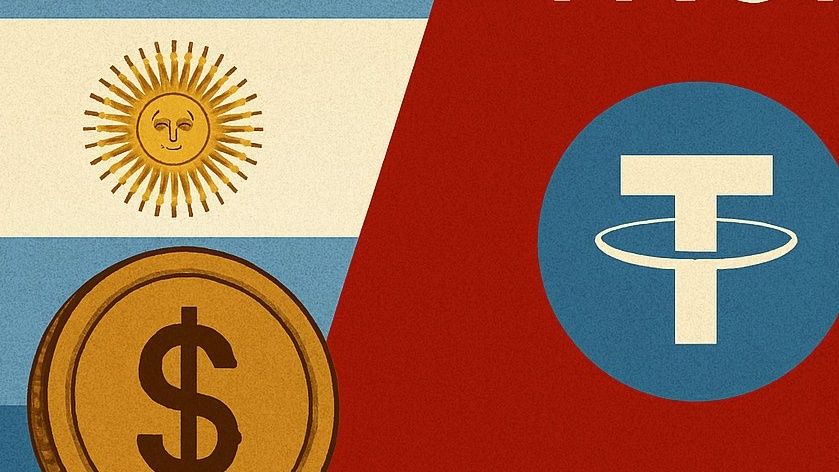
Argentina presents an equally fascinating case but with different nuances. With a long tradition of saving in physical dollars "under the mattress," Argentines have found in stablecoins the digital version of that ancestral practice, but with significant advantages.
From exchange controls to digital freedom
Strict capital controls that severely limit the purchase of official dollars have pushed millions of Argentines toward stablecoins. According to data from Chainalysis cited by Infobae, Argentina led cryptocurrency adoption in Latin America during 2024, with 18.2% of its population holding crypto assets and a transaction volume of $91.1 billion.
As explained by Sebastián Serrano, CEO of Ripio, cited by iProup, "Argentines bet on stablecoins because they provide security similar to physical cash. That explains why there is so much use of stablecoins, because it is a good digital alternative to the physical storage of dollars."
An evolving market
Something interesting happened in Argentina during 2024. With the slowdown in inflation and some stability in the official exchange rate under the administration of Javier Milei, the equation began to change. According to the Lemon report cited by Infobae, stablecoins lost some ground to Bitcoin, which saw a 122% rise and surpassed $100,000.
"Those who opted for stablecoins at the beginning of 2024 faced a loss of purchasing power, while those who invested in Bitcoin achieved significant gains," the report notes. Nevertheless, stablecoins remain a fundamental pillar of the daily economy due to the tradition of saving in dollars and their historical strength against the Argentine peso.
QR payments in cryptocurrencies
The infrastructure for using stablecoins in Argentina is becoming sophisticated rapidly. According to Invezz, Binance Pay now allows instant, fee-free crypto payments in Argentina via QR codes, facilitating transactions at physical stores with the same simplicity as a traditional bank transfer.
The numbers that tell the story
The data on stablecoin adoption in Venezuela and Argentina are revealing and contrast sharply with other countries in the region:
Venezuela: 34% of the total volume of retail transactions is based on the exchange of stablecoins, the highest figure in Latin America. The country processed $37.4 billion in digital asset transactions, a 32% increase over the previous year.
Argentina: 31% of retail transaction volume comes from the sale of stablecoins on platforms such as exchanges. The country received $91.1 billion in crypto asset value during 2024, 6.7% higher than the previous year.
According to the 2025 Global Crypto Adoption Index by Chainalysis, cited by BeInCrypto, Latin America experienced a 63% growth in crypto asset adoption between 2024 and 2025, surpassing all other regions. This growth is strongly driven by the use of stablecoins in Venezuela and Argentina.
Why do stablecoins work where banks have failed?
Stablecoins offer advantages that traditional financial systems simply cannot match in contexts of economic crisis:
Universal accessibility: You only need a smartphone and an internet connection. You do not need a bank account, credit history, or complex documentation.
Value stability: By being pegged to the US dollar, they protect against inflation and the devaluation of local currencies.
Instant transactions: Transfers are completed in minutes, not days like international bank transfers.
Minimal costs: Commissions are significantly lower than those of traditional banks or remittance services.
No intermediaries: Peer-to-peer transactions eliminate the dependence on institutions that can freeze accounts or impose restrictions.
24/7 availability: There are no banking hours or holidays that prevent transactions.
As noted by TRM Labs in its 2025 report, growth in Latin America "no longer depends on speculation, but on structural factors: digital infrastructure, progressive regulation, and real demand for alternative financial instruments."
WEEX: Facilitating access to stablecoins in Latin America
In this context of financial transformation, having a reliable, secure, and efficient exchange platform is absolutely crucial. WEEX has positioned itself as one of the most respected exchanges for Latin American users looking to access stablecoins and other crypto assets with total security.
Why is WEEX ideal for trading with stablecoins?
Institutional security: With a User Protection Fund of 1,000 BTC, WEEX demonstrates its unwavering commitment to the security of funds. In a sector where trust is fundamental, this guarantee provides you with essential peace of mind.
Multiple stablecoins available: WEEX offers access to the main stablecoins on the market, including USDT, USDC, and other options, allowing for diversification and flexibility.
Deep liquidity: With more than 1,800 trading pairs, WEEX ensures that you can always convert between stablecoins and other cryptocurrencies or local currencies without liquidity issues.
Spanish interface: Unlike many international platforms, WEEX offers a completely Spanish-language experience with local support that understands the specific needs of Venezuelan and Argentine users, among many others.
Efficient on-ramps and off-ramps: It facilitates the conversion between local currencies and stablecoins, a process that can be complicated on other exchanges.
For those looking to take advantage of the opportunities of Financial inclusion through cryptocurrencies in Latin America, WEEX provides the tools and infrastructure necessary to navigate this new financial ecosystem with confidence.
Beyond savings: Job opportunities in the crypto ecosystem
The explosion in the use of stablecoins is not only transforming how people save and spend, but it is also creating an entirely new ecosystem of job opportunities. From blockchain developers to regulatory compliance specialists, from professional traders to crypto educators, the Web3 job market is booming.
For Argentines and Venezuelans with technical skills, the crypto world offers the possibility of earning in dollars while working from home. Several global blockchain companies are hiring Latin American talent for roles in development, marketing, customer support, and analysis. The advantages are clear: competitive salaries in stablecoins, flexible hours, and the possibility of participating in innovative projects worldwide.
If you are interested in exploring these possibilities, discover more about working in Web3 from Latam: job opportunities in the crypto and blockchain ecosystem. The future of work is already here, and it is denominated in stablecoins.
The challenges that still persist
Despite the resounding success of stablecoins in Venezuela and Argentina, several significant challenges persist:
Digital divide: Not everyone has access to smartphones or stable internet, especially in rural areas. This creates a new form of financial exclusion.
Digital literacy: Many people, especially older adults, struggle with the technology necessary to use stablecoins securely.
Security risks: Phishing, scams, and hacks are real threats. Security education is fundamental, but still insufficient.
Volatility of USDT itself: Although they are "stable," these coins depend on their issuers maintaining adequate reserves. The collapse of an important stablecoin could be devastating.
Infrastructure limitations: Power outages and connectivity problems, especially frequent in Venezuela, hinder consistent access.
Regulatory uncertainty: Sudden changes in government policies could restrict access to stablecoins or their use.
Lessons for the rest of the world
The experience of Venezuela and Argentina with stablecoins offers valuable lessons for the rest of the world:
Crypto adoption is driven by necessity, not speculation: When people face real crises, cryptocurrencies cease to be a technological toy and become a survival tool.
Crypto infrastructure can be scaled quickly: Despite significant challenges, millions of people adopted stablecoins in a relatively short time.
Decentralized systems are resilient: Despite attempts at control, restrictions, and sanctions, the crypto ecosystem has proven to have the capacity for adaptation and survival.
Education is essential, but it can happen organically: People learn to use these technologies out of necessity, and then they teach others, creating a powerful network effect.
Traditional finance is not irreplaceable: When banks and governments fail, decentralized alternatives can effectively fill the void.
Conclusion: An unstoppable financial revolution
The increase in the use of stablecoins in Venezuela and Argentina is not a passing fad or a technological experiment. It is a fundamental financial revolution driven by the need for economic survival. While 34% of retail transactions in Venezuela and 31% in Argentina are conducted with stablecoins, these countries are showing the world that cryptocurrencies can function as real monetary infrastructure when traditional systems collapse.
This transformation is redefining fundamental concepts of money, monetary sovereignty, and financial access. Stablecoins have shown that you do not need the permission of a central bank to create a functional monetary system. You only need blockchain technology, internet access, and an urgent need for financial stability. For millions of Venezuelans who pay their daily expenses with USDT and millions of Argentines who protect their savings in stablecoins, this is not abstract economic theory; it is their daily reality.
Platforms like WEEX facilitate this transformation by providing the secure and accessible infrastructure that allows ordinary people to participate in this new digital economy. Financial inclusion no longer depends on having a traditional bank account; it depends on having a smartphone and access to reliable exchanges that offer stablecoins with deep liquidity and institutional security.
The financial future of Latin America is being written now, transaction by transaction, in Venezuela and Argentina. Other countries in the region and the world are watching them closely, and many will begin to follow the same path as they recognize that stablecoins are not just an alternative, but in many cases, a superior solution to failed traditional monetary systems. This is the new face of financial inclusion in the 21st century, and it is forever transforming the economic landscape of Latin America. Are you ready to join? Download the WEEX app and learn how to buy stablecoins.
Disclaimer
WEEX and its affiliates provide digital asset exchange services, including derivatives trading and margin trading, only where it is legal to do so and for eligible users. All content is general information and does not constitute financial advice. You should seek financial advice before trading. Cryptocurrency trading is a high-risk activity and can lead to the total loss of your assets. By using WEEX services, you accept all risks and related terms. Never invest more than you can afford to lose. Consult our Terms of Use and our Risk Disclosure for full details.