Mastering Types of Orders on WEEX Exchange: A Complete Guide

By: WEEX|2025/03/03 17:00:24
0
Share
copy

When trading on WEEX Exchange, understanding the different types of orders is essential for maximizing your efficiency and success. Each order type serves a unique purpose, helping traders execute trades with precision, manage risks effectively, and optimize their strategies. In this guide, we will explore the various order types available on WEEX, their functions, and how to use them to your advantage.

What Are Order Types in Trading?

Order types define how a trade is executed in the market. They help traders control entry and exit points, manage risk, and automate trading strategies. Choosing the right order type can improve trading performance and prevent costly mistakes, especially in the highly volatile cryptocurrency market.

Types of Orders Available on WEEX Exchange

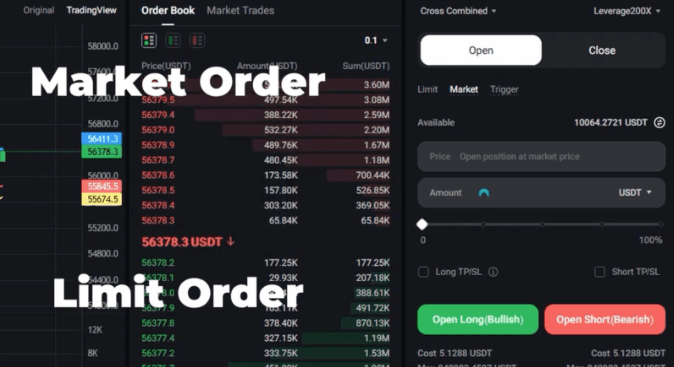
1. Market Order

A Market Order is executed immediately at the best available price. It is the fastest way to enter or exit a trade, but the final execution price may differ slightly due to market fluctuations.

  • Best for: Traders who prioritize speed over price accuracy.
  • How to use: Select 'Market Order' when placing a trade, enter the amount, and confirm the order.
Mastering Types of Orders on WEEX Exchange: A Complete Guide


2. Limit Order

A Limit Order allows traders to buy or sell an asset at a specified price or better. The order is executed only when the market reaches the specified price, ensuring greater control over trade execution.

  • Best for: Traders who want to set their own entry or exit price.
  • How to use: Choose 'Limit Order,' set the desired price, input the amount, and place the order.

3. Stop-Loss Order

Stop-Loss Order is a risk management tool that automatically closes a trade when the price reaches a predetermined level, minimizing potential losses.

  • Best for: Traders looking to protect their capital from major price downturns.
  • How to use: Enable 'Stop-Loss' when placing a trade and enter the stop price.

4. Take-Profit Order

Take-Profit Order is used to lock in profits by automatically closing a position once a target price is reached.

  • Best for: Traders who want to secure profits at a specific price level.
  • How to use: Set a Take-Profit price when placing a trade.

5. Stop-Limit Order

Stop-Limit Order combines elements of stop-loss and limit orders. When the stop price is reached, a limit order is placed at a specified price.

  • Best for: Traders who want precise control over stop-loss execution.
  • How to use: Define the stop price and limit price before placing the order.

Choosing the Right Order Type for Your Strategy

The best order type depends on your trading strategy:

  • Scalping & High-Frequency Trading: Market Orders & Limit Orders
  • Risk Management: Stop-Loss & Trailing Stop Orders
  • Passive Trading: Post-Only & Iceberg Orders
  • Profit Optimization: Take-Profit & Stop-Limit Orders

Conclusion

WEEX Exchange provides a variety of order types to suit different trading styles and strategies. By understanding how each order type works, you can enhance your trading efficiency, manage risk effectively, and improve your overall performance in the crypto market.

Start trading smarter on WEEX today by utilizing the right order types for your strategy!
 

You may also like

World Collective Oil Reserve (WCOR) Price Prediction 2026-2045: Expert Insights

WCOR (World Collective Oil Reserve) is a Solana-based cryptocurrency token that promotes an “oil reserve + real-world asset (RWA) narrative.” However, there is no public evidence that it is actually backed by physical oil assets. It is essentially a highly speculative, narrative-driven token. Its current market cap is around $14 million, with relatively low liquidity and high volatility, and its price is mainly driven by market sentiment and hype. Most analyses suggest limited short-term upside, with a possible gradual increase to around $0.02 by 2030. Overall, it is considered a high-risk crypto asset driven more by narrative speculation than fundamentals.

WEEX Gold & Silver 0% Fees Event: Trade Metals, Crude Oil and Stock Futures With Zero Fees

Join the WEEX 0-fee futures event from April 16 to May 31, 2026. Trade eligible gold, silver, crude oil, and stock futures with 0% fees.

Can PAC Coin Reach $1 Soon? Analyzing Public Asset Control

PAC is a Solana-based meme token with a government-themed narrative, but it is highly speculative.

At its current price (~$0.0009) and 1B supply, reaching $1 would require a $1B market cap, which is very unlikely.

Short-term moves to $0.001 or $0.01 are more realistic, but the token is highly volatile due to low liquidity and hype-driven trading.

Overall, $1 is not a realistic target, and PAC is better suited for short-term speculation than long-term investment.

What Is SAOS? Strategic American Oil Supply Token Explained

SAOS is a meme token on Solana with a 75,000 USD market cap and 22,000 USD locked liquidity, positioned around oil supply themes but lacking real asset backing

It thrives on pure narrative speculation, with no utility, website, or doxxed team, making it highly volatile and attention-dependent

Traders should distinguish SAOS from legitimate real-world asset projects, as its branding is speculative rather than substantive

Positive aspects include locked liquidity reducing rug pull risks, but low trading activity signals high uncertainty

NBIS Stock: What Nebius’ AI Cloud Surge Means Now

NBIS stock jumped as Nebius reported rapid AI cloud growth. See the key Q1 2026 numbers, catalysts, valuation risks, and what to watch next.

What Is Public Asset Control (PAC) Coin? Explained for Beginners

Public Asset Control (PAC) is a Solana-based token that uses a “government asset control” narrative involving oil and gold themes, but it has no verified ties to any real institutions or governments. It is mainly an entertainment-focused, speculative meme coin.

The project’s claims about links to entities like BlackRock or Palantir are unverified, and its own disclaimer states it is not a real financial or institutional asset. Like many new Solana tokens, PAC is highly volatile, with low liquidity and limited transparency, including no fully verified audit.

Overall, PAC is a high-risk speculative token driven by hype and storytelling rather than real utility. Beginners are advised to be cautious, verify contract details, and prioritize risk control before considering any trading.

Popular coins

iconiconiconiconiconiconicon
Customer Support:@weikecs
Business Cooperation:@weikecs
Quant Trading & MM:bd@weex.com
VIP Program:support@weex.com