
 Buy Crypto
- Markets
 Futures
- Spot
- Copy Trade
- Earn
- More
Does AI Trading Actually Work? Real-World Evidence from Crypto Markets in 2026

As we hit mid-February 2026, AI trading is making waves in the crypto world, especially with events like the WEEX AI Trading Hackathon entering its finals. This global competition, hosted by WEEX Labs, pits AI-driven strategies against live market volatility, offering over $1 million in prizes and even a Bentley Bentayga S for the winner. Drawing from real data and performances, this article explores whether AI trading truly delivers results. We’ll break down how it performs in turbulent conditions, share insights from top performers, and provide forecasts for its role in crypto trading. Expect technical analysis, market outlooks, and practical advice to help you decide if AI tools fit your strategy.
Understanding AI Trading Basics and Its Rise in Crypto
AI trading refers to using artificial intelligence to analyze market data, predict trends, and execute trades automatically. In the crypto space, where prices can swing wildly due to news or whale movements, AI promises to cut through the noise. Think of it as a tireless analyst that processes vast amounts of data—from Bitcoin’s market cap fluctuations to Ethereum’s DeFi activity—faster than any human could.
The concept isn’t new, but it’s evolved rapidly. Early versions relied on simple algorithms, much like basic bots in forex markets. Now, with advancements in machine learning, AI can adapt to nonlinear data streams, spotting patterns in things like staking rewards or token supply changes. According to reports from CoinMarketCap as of February 20, 2026, the overall crypto market cap sits at around $2.5 trillion, with AI-related tokens gaining traction amid broader adoption.
What sets modern AI trading apart is its shift from rigid rules to dynamic decision-making. In the WEEX AI Trading Hackathon, participants use AI agents that act as researchers, risk managers, and traders all in one. This setup democratizes quant trading, letting even beginners direct strategies with simple commands. But does it work? Real-world tests, like this hackathon, provide clues.
Proof from the WEEX AI Trading Hackathon: Does AI Trading Work in Volatile Markets?
To answer if AI trading works, look no further than the WEEX AI Trading Hackathon’s preliminary round results. Amid a tough market—Ethereum down 30% and Bitcoin dropping 20%—Hubble AI users shone brightly. For instance, contestant Bob took first in Group 2-2 with a +285.9% PnL, while Morris led Group 1-13 at +141.2%. These aren’t flukes; they happened in live conditions with real capital at stake.
Hubble AI, a co-presenting sponsor, powered 10 of the 37 finalists, showcasing an impressive qualification rate. Over 14 days, 26 active users generated over 16.7 million in trading volume, with 86,000+ agent decisions and 18,400+ transactions. This data, sourced from the hackathon’s performance metrics, highlights AI’s edge: it removes emotional bias, sticks to data-driven analysis, and scales efficiently.
Consider Medy, who repeatedly topped the “dark horse” leaderboard, or Leon and Nick dominating Group 1-10. These successes underline AI trading’s potential to outperform in adverse conditions. Crypto analyst Leon, Hubble’s CEO, puts it well: “The future isn’t about staring at charts endlessly; it’s about sharp investment thinking and commanding AI effectively.” His words echo a broader shift to Quant 2.0, where AI handles 24/7 execution based on user-defined risks.
For beginners, this means AI can amplify your strategy without needing deep coding skills. If you’re new to crypto, start by testing AI tools on demo accounts to see how they handle volatility in assets like BTC or ETH.
Analyzing AI Trading Performance: Key Metrics and Forecasts
Diving deeper into metrics, let’s examine how AI trading stacks up. In the hackathon, Hubble’s AI agents demonstrated high-frequency execution with stability, even as markets tumbled. This aligns with industry trends; a 2025 report from Deloitte noted that AI-driven funds outperformed traditional ones by 15% in volatile periods, though crypto-specific data is emerging.
Here’s a quick look at standout performances from the preliminaries, presented in a table for clarity:
| Contestant | Group | PnL Percentage | Key Achievement |
|---|---|---|---|
| Bob | 2-2 | +285.9% | 1st Place amid ETH/BTC drops |
| Morris | 1-13 | +141.2% | Top spot in high-volatility group |
| Medy | Various | N/A | Multiple “dark horse” features |
| Leon | 1-10 | N/A | Consistent Top 1-2 ranking |
| Nick | 1-10 | N/A | Consistent Top 1-2 ranking |
These figures, drawn from WEEX’s official rankings as of February 2026, show AI’s ability to generate positive returns when markets are down. Short-term forecast: With Bitcoin hovering around $60,000 per CoinMarketCap data on February 20, 2026, AI strategies could target rebounds in altcoins, predicting gains of 10-20% in the next quarter if adoption grows.
Long-term outlook? By 2030, AI trading might dominate, especially in DeFi where staking and yield farming require constant monitoring. However, it’s not foolproof—AI can falter in black swan events, like sudden regulatory changes. My take as a seasoned trader: Pair AI with human oversight for the best results. Use it for pattern recognition, but verify with fundamental analysis.
Hubble AI’s Role in Making AI Trading Accessible and Effective
Hubble AI isn’t just sponsoring; it’s building infrastructure for what they call Vibe Trading, evolving from basic quant strategies to AI as the core brain. Participants get access to agents that enhance execution and risk management, turning complex ideas into actionable trades.
This collaboration with WEEX fosters an ecosystem based on user feedback. Upcoming features, like an emergency position-close button and AI log summaries, make tools more transparent. For crypto enthusiasts, this means easier entry into advanced trading without a PhD in data science.
If you’re curious about getting involved, check out the WEEX AI Trading Hackathon Finals to see live strategies in action and join the community. It’s a great way to learn and potentially participate in future events.
Plus, the global workshop series is underway. Catch the WEEX Amsterdam AI Trading Workshop Livestream happening today—it’s packed with insights on building AI strategies.
Challenges and Risks: When AI Trading Doesn’t Work
No discussion of AI trading is complete without addressing pitfalls. While it excels in data-heavy environments, AI can amplify losses if models are poorly trained. In crypto, where pump-and-dump schemes are common, over-reliance on AI without understanding market sentiment can backfire.
Recent news, like the 2025 flash crash tied to faulty AI bots, reminds us of the risks. Forecasts suggest that as AI matures, error rates could drop, but for now, blend it with manual checks. Actionable advice: Set strict risk parameters, like limiting exposure to 5% of your portfolio per trade, and diversify across assets.
Actionable Insights for Getting Started with AI Trading
If you’re convinced AI trading works and want to try it, begin small. Platforms like WEEX offer AI-integrated tools for spot and derivatives trading. Analyze historical data—say, how AI would have handled Bitcoin’s 2024 halving—and backtest strategies.
For forecasts, watch for AI adoption in Web3; it could push trading volumes up 25% by year-end, per Chainalysis reports. My insight: Treat AI as a co-pilot, not the driver. It works best when enhancing your knowledge, not replacing it.
FAQ: Common Questions About AI Trading
What is AI trading and how does it work in crypto?
AI trading uses algorithms to analyze data and make trades automatically. In crypto, it processes market cap info, price trends, and news to predict moves, working 24/7 to spot opportunities in volatile assets like Bitcoin.
Does AI trading really work for beginners?
Yes, AI trading can work for beginners by simplifying complex decisions, but it requires learning basics first. Start with user-friendly tools to avoid common pitfalls, and always monitor performance.
Can AI trading predict crypto prices accurately?
AI trading improves price predictions through data analysis, but it’s not always accurate due to market unpredictability. Tools like those in the WEEX hackathon have shown strong results in real tests.
What are the risks of using AI for trading?
Risks include model errors leading to losses and over-dependence removing human judgment. Mitigate by setting stop-losses and diversifying, especially in high-risk crypto markets.
How has AI trading performed in recent crypto events?
In events like the WEEX AI Trading Hackathon, AI has outperformed, with users achieving high PnL during market dips. This suggests it works well under pressure.
Is AI trading the future of crypto investment?
AI trading is shaping up as a key part of crypto’s future, evolving to Quant 2.0 for better efficiency. However, success depends on integration with personal strategies.
As someone who’s traded crypto through multiple cycles, I’ve seen AI shift from hype to a practical tool. It works when used wisely, turning data into decisions that humans might miss. But remember, markets are unpredictable—stay informed and adapt. For now, events like this hackathon prove AI trading isn’t just theory; it’s delivering real wins in 2026’s crypto landscape.
DISCLAIMER: WEEX and affiliates provide digital asset exchange services, including derivatives and margin trading, only where legal and for eligible users. All content is general information, not financial advice-seek independent advice before trading. Cryptocurrency trading is high risk and may result in total loss. By using WEEX services you accept all related risks and terms. Never invest more than you can afford to lose. See our Terms of Use and Risk Disclosure for details.
You may also like

Introducing Zcash ($ZEC): Protocol Updates and Price Prediction
Zcash is a decentralized cryptocurrency focused on privacy and anonymity. $ZEC has hit everyone’s attention recently.

What is SMC Factory (SMCF) Coin: Everything You Need to Know
SMC Factory (SMCF) is a meme coin inspired by the concept of factory-style production of meme tokens, originating…
Oil Tokenization: Models, Risks, and Real Market Use Cases in 2026
Oil Tokenization is turning crude oil exposure into digital assets, but in 2026 the real divide is between credible, auditable structures and speculative oil-linked tokens with weak backing.

Tether Gold (XAUT): What It Is, How It Works, and Key Risks
What is Tether Gold (XAUT)? Learn how this tokenized gold works on Ethereum, Tron, and BNB Chain, plus fees, reserves, risks, and XAUT vs PAXG.
How to Buy Russian Oil Asset Reserve (ROAR) Crypto: 2026 Step-by-Step Guide
Learn how to buy Russian Oil Asset Reserve (ROAR) crypto on Solana DEXs. Step-by-step guide with contract address, wallet setup, risks, and safety tips.

What is Russian Oil Asset Reserve (ROAR): Is ROAR Crypto Legitimate or a Scam?
What is Russian Oil Asset Reserve (ROAR) crypto? We analyze the Solana meme coin tied to oil narratives, tokenomics, risks, and whether it has real backing.
Russian Oil Asset Reserve (ROAR): Is ROAR Crypto a Hype?
What is Russian Oil Asset Reserve (ROAR) crypto? We analyze the Solana meme coin tied to oil narratives, tokenomics, risks, and whether it has real backing.

What is イロハ (IROHA) Coin: Everything You Need to Know
イロハ (IROHA) is a community-driven meme token on the Solana blockchain, inspired by cultural themes and aiming to…

What is iShares MSCI India (INDAON) Coin
iShares MSCI India (INDAON) is a tokenized version of the iShares MSCI India ETF, created by Ondo Finance…
What is Build N Build (共建) Coin? Everything You Need to Know
Build N Build (共建) Coin represents a community-driven token on the Binance Smart Chain, inspired by a tweet…
What is iShares MSCI EAFE Tokenized ETF (Ondo) (EFAON) Coin
iShares MSCI EAFE Tokenized ETF (Ondo) (EFAON) Introduction iShares MSCI EAFE Tokenized ETF (Ondo) (EFAON) is a tokenized…

WEEX OFC Airdrop Guide: Claim Your New User Bonus and OFC Rewards
Discover how to participate in the WEEX OFC airdrop event from April 9 to April 15, 2026. This guide covers how to maximize your new user bonus, claim free rewards through spot trade tasks, and optimize your trading fees on one of the fastest-growing crypto exchanges.
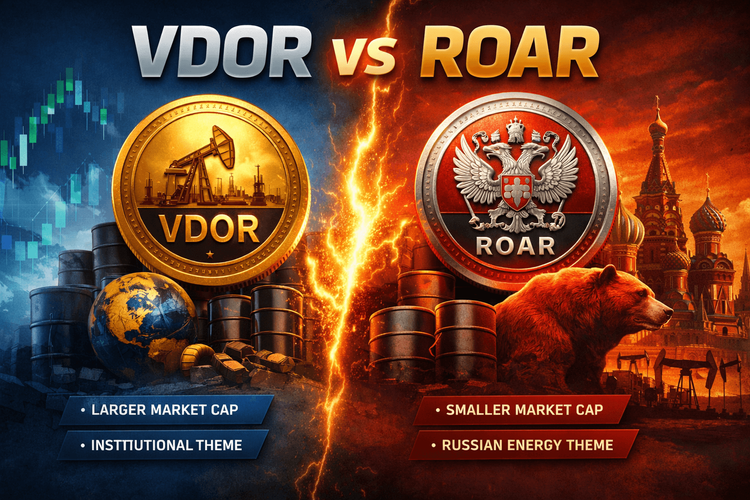
VDOR vs ROAR: Which Oil-Theme Crypto Token Looks Stronger in 2026?
VDOR vs ROAR explained with the latest market data, contract addresses, legitimacy checks, token differences, and which oil-theme crypto looks stronger in 2026.

Is Russian Oil Asset Reserve (ROAR) Legitimate or a Scam?
Is Russian Oil Asset Reserve (ROAR) legitimate? Read the latest ROAR legitimacy check, official contract address, market data, risks, and expert verdict.
What is OneFootball Credits (OFC) Coin
OneFootball Credits (OFC) is a utility token designed to fuel a global fan economy in the football world,…
Where Can I Buy ROAR Crypto? Step-by-Step Guide and Insights
ROAR crypto, the token behind the Russian Oil Asset Reserve project, has caught attention amid shifting global energy…
OneFootball Credits (OFC) Price Prediction & Forecasts for April 2026: Up 8% in 24 Hours Amid Rising Trading Volume
As of April 9, 2026, OneFootball Credits (OFC) is trading at $0.168229 USD, according to data from CoinMarketCap.…

Is Russian Oil Asset Reserve (ROAR) a Good Investment in 2026? Latest Price, Risks, and Everything Buyers Should Know
Is Russian Oil Asset Reserve (ROAR) a good investment? Explore the latest ROAR price, market cap, risks, Solana token details, and expert verdict.
Introducing Zcash ($ZEC): Protocol Updates and Price Prediction
Zcash is a decentralized cryptocurrency focused on privacy and anonymity. $ZEC has hit everyone’s attention recently.
What is SMC Factory (SMCF) Coin: Everything You Need to Know
SMC Factory (SMCF) is a meme coin inspired by the concept of factory-style production of meme tokens, originating…
Oil Tokenization: Models, Risks, and Real Market Use Cases in 2026
Oil Tokenization is turning crude oil exposure into digital assets, but in 2026 the real divide is between credible, auditable structures and speculative oil-linked tokens with weak backing.
Tether Gold (XAUT): What It Is, How It Works, and Key Risks
What is Tether Gold (XAUT)? Learn how this tokenized gold works on Ethereum, Tron, and BNB Chain, plus fees, reserves, risks, and XAUT vs PAXG.
How to Buy Russian Oil Asset Reserve (ROAR) Crypto: 2026 Step-by-Step Guide
Learn how to buy Russian Oil Asset Reserve (ROAR) crypto on Solana DEXs. Step-by-step guide with contract address, wallet setup, risks, and safety tips.
What is Russian Oil Asset Reserve (ROAR): Is ROAR Crypto Legitimate or a Scam?
What is Russian Oil Asset Reserve (ROAR) crypto? We analyze the Solana meme coin tied to oil narratives, tokenomics, risks, and whether it has real backing.


 App
App