
Will Bitcoin ETF Increase Bitcoin Price in 2026?


TL;DR
- Bitcoin ETFs can influence Bitcoin price, but not in the short term
- ETF inflows are widely used as signals of institutional demand strength
- Consistent inflows often support long-term market confidence
- Short-term BTC moves still depend on liquidity and derivatives positioning
- In 2026, ETF adoption remains one of the strongest structural drivers of Bitcoin demand
Why Investors Believe Bitcoin ETFs Can Influence Price
Since Bitcoin ETFs became widely available in major financial markets, they introduced a new channel through which traditional capital can gain exposure to Bitcoin without interacting with crypto infrastructure directly.
This structural change matters because price movements in global markets are often driven not only by retail participation, but by how easily large investors can allocate capital.
Before ETFs existed, institutional exposure to Bitcoin required specialized custody arrangements, internal approval processes, and technical integration. ETFs simplified that process by allowing Bitcoin exposure to be treated more like commodity or index allocation within existing portfolio systems.
As a result, ETF inflows are now widely interpreted as signals of long-term allocation behavior rather than speculative positioning.
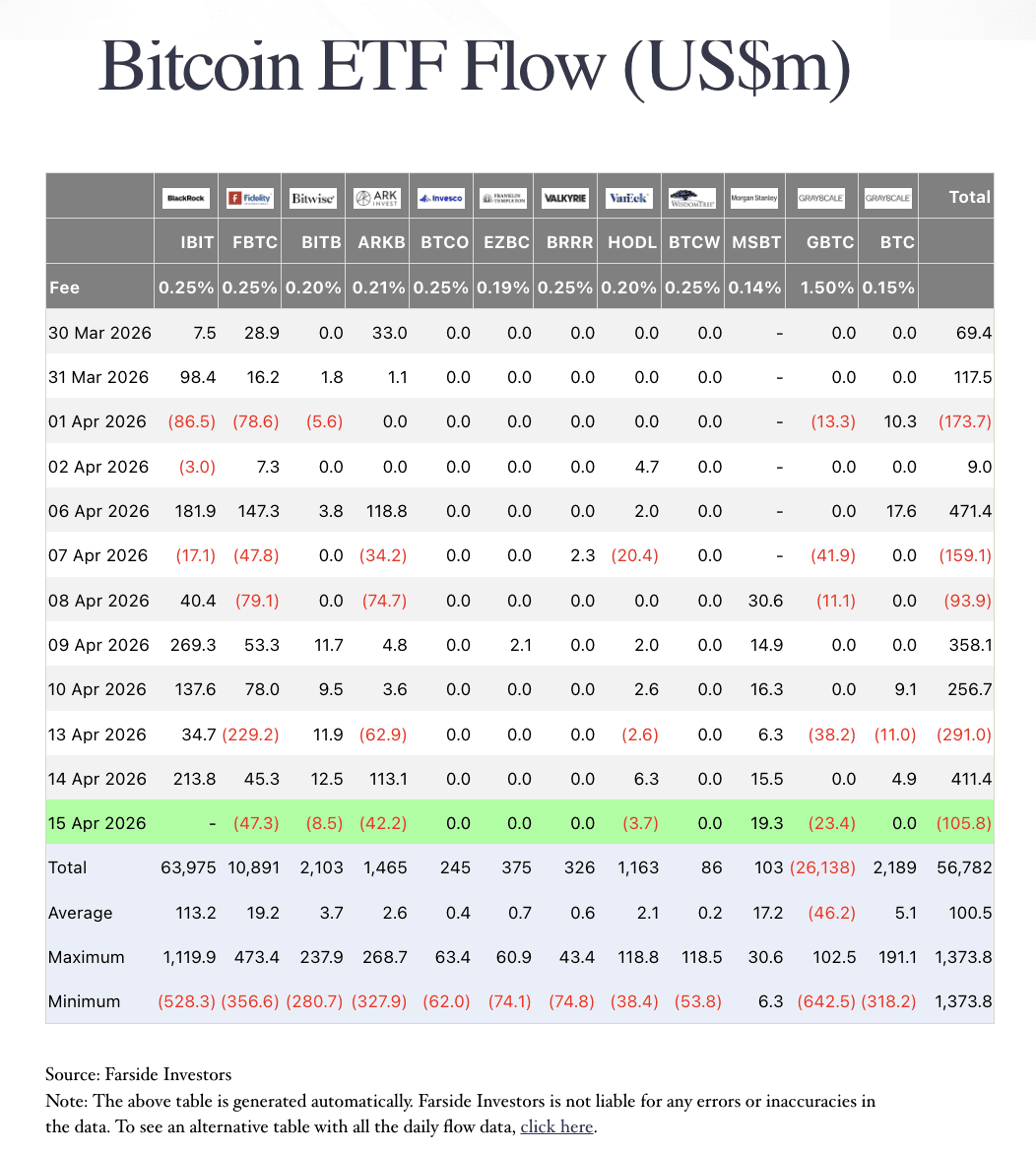
Bitcoin ETF flow data shows how institutional allocation demand enters the market through regulated investment channels. Large positive inflow days—such as April 6 and April 14, 2026—highlight periods when portfolio capital increased exposure to Bitcoin, supporting liquidity conditions even during volatile market environments.
How Bitcoin ETF Inflows Affect Market Structure
Bitcoin ETFs influence price indirectly through liquidity structure rather than through immediate buying pressure alone.
When ETF inflows increase consistently, they typically indicate that portfolio managers are expanding exposure over time. This creates a slower but more stable demand base compared with short-term trading flows.
In contrast to derivatives-driven rallies, ETF-driven demand tends to reflect strategic allocation decisions rather than leverage cycles. Because of this, analysts often view ETF accumulation periods as supportive of long-term price stability rather than short-term volatility spikes.
In 2026, many market participants monitor ETF flow trends alongside on-chain accumulation metrics to understand whether capital entering the market is structural or temporary.
As shown in the chart above, Bitcoin ETF inflows can vary significantly from day to day, but sustained positive flow periods often signal strengthening institutional allocation demand. For example, several trading sessions in early April 2026 recorded net inflows exceeding $300 million per day, demonstrating how ETF channels can introduce large-scale capital into the market within short time windows.
 BTC price movement.png" width="1280" height="588">
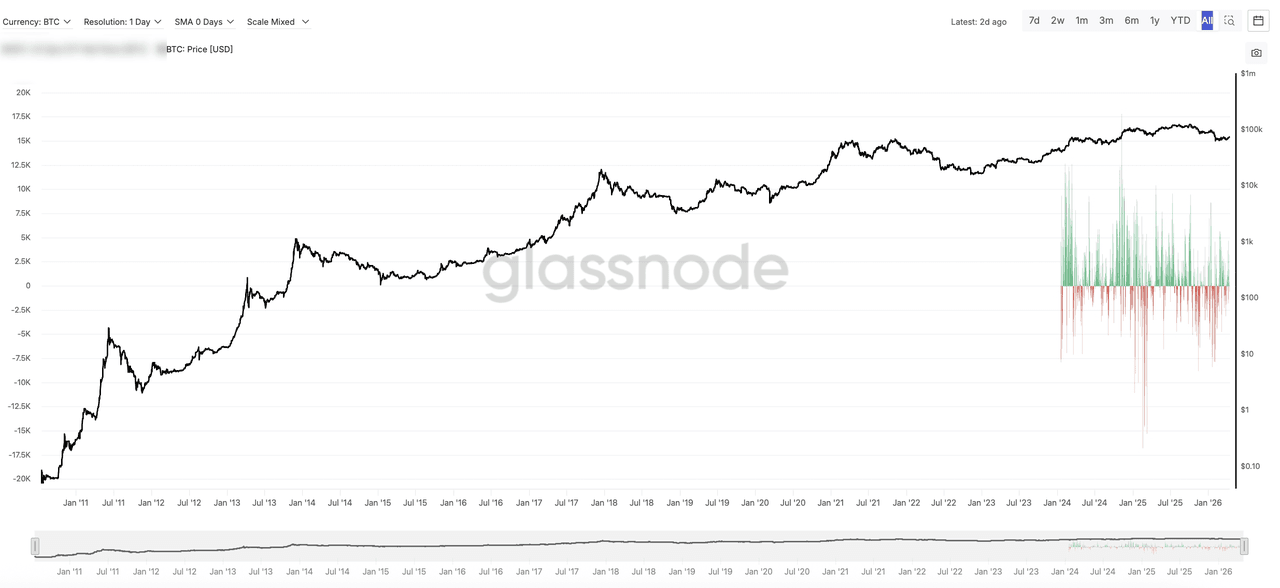
As shown in the chart above, spot Bitcoin ETF flows have created a new institutional capital channel into the Bitcoin market. Periods of sustained positive inflows often coincide with strengthening price momentum, suggesting that ETF allocation demand increasingly plays a role in shaping short-term liquidity conditions.
Since the introduction of spot Bitcoin ETFs, capital entering through regulated investment vehicles has become an important component of market participation, reinforcing Bitcoin’s transition from a retail-driven asset toward a more institutionally influenced market structure.
Why ETF Flows Do Not Always Move Bitcoin Immediately
Although ETF inflows are important indicators, they do not guarantee short-term price increases.
Bitcoin price movements remain influenced by multiple factors, including:
global liquidity conditions
macro interest rate expectations
derivatives positioning
miner behavior
long-term holder supply trends
ETF demand interacts with these variables rather than replacing them.
For example, strong ETF inflows during periods of tightening global liquidity may support price resilience without triggering immediate rallies. Conversely, weak inflows during expansionary liquidity environments may reduce upward momentum.
This explains why ETF flows are better interpreted as medium-term positioning signals rather than daily trading indicators.
Why Institutional Allocation Still Matters in 2026
One reason Bitcoin ETFs continue to influence market expectations is their role in long-term portfolio allocation strategies.
Unlike short-term trading flows, institutional allocations are typically gradual and persistent. Portfolio managers often adjust exposure over weeks or months rather than reacting to intraday volatility.
Because of this behavior pattern, ETF inflow trends are often associated with:
improving market confidence
increasing liquidity depth
reduced structural selling pressure
Over time, these changes contribute to a stronger market foundation even when price reactions are not immediate.
What Analysts Watch When Evaluating ETF Impact on Price
Instead of focusing on single-day inflow numbers, analysts usually monitor broader flow patterns across multiple time horizons.
Particular attention is often given to whether ETF inflows:
remain consistent during consolidation periods
increase after volatility events
continue during macro uncertainty
Sustained inflows during uncertain market conditions are often interpreted as signals that institutional investors are treating Bitcoin as a strategic allocation asset rather than a speculative trade.
This shift in perception is one of the reasons ETF activity remains closely watched in 2026.
Can Bitcoin ETF Adoption Support Long-Term Price Growth?
While ETFs alone do not determine Bitcoin's price direction, they change how capital enters the market over time.
By lowering access barriers for traditional investors and integrating Bitcoin exposure into existing portfolio systems, ETFs expand the potential investor base that can participate in the asset class.
This broader accessibility increases the likelihood that Bitcoin becomes part of diversified allocation strategies rather than remaining a niche investment.
For this reason, many analysts view ETF adoption not as a short-term catalyst, but as a structural driver supporting Bitcoin's long-term price trajectory.
About WEEX
Founded in 2018, WEEX has developed into a global crypto exchange with over 6.2 million users across more than 150 countries. The platform emphasizes security, liquidity, and usability, providing over 1,200 spot trading pairs and offering up to 400x leverage in crypto futures trading. In addition to the traditional spot and derivatives markets, WEEX is expanding rapidly in the AI era — delivering real-time AI news, empowering users with AI trading tools, and exploring innovative trade-to-earn models that make intelligent trading more accessible to everyone. Its 1,000 BTC Protection Fund further strengthens asset safety and transparency, while features such as copy trading and advanced trading tools allow users to follow professional traders and experience a more efficient, intelligent trading journey.
Follow WEEX on social media
X: @WEEX_Official
Instagram: @WEEX Exchange
Tiktok: @weex_global
Youtube: @WEEX_Official
Discord: WEEX Community
Telegram: WeexGlobal Group
You may also like

Strategy Founder: The Next 10 Years of Bitcoin
Forbes Special Report: Stablecoin cross-border payments are faster now, but not cheaper yet
Li Feifei's latest long article: When video generation, robots, and NVIDIA all claim to be world models, we need a taxonomy
Blaming the desolation of the cryptocurrency world on the rise of AI is a form of intellectual laziness
The impact of OUSD on Circle, Tether, and Paxos: not a single negative factor, but a more complex reshaping of competition
A valuation of 8 billion dollars, doubling in 8 months! What makes the crypto-friendly bank Erebor Bank stand out?
340 billion valuation: Li Yanhong's largest IPO, a seat in Kunlunxin's shares is hard to come by
Stablecoins are the "royalists" of the crypto world: Open USD brings the old currency system into play
Cape Verde 2-3 Argentina: The Underdog Team That Stunned the World in Defeat
Cape Verde's run ended in a 3-2 defeat to Argentina, but their journey — three unbeaten draws, one heroic goalkeeper, and a fight that pushed the defending champions to the brink — is the kind of story markets recognize too: small caps can rattle blue chips long before anyone expects it.
Semiconductor stocks plummet, yet Anthropic wants to create a 2nm chip
Where is Zhao Changpeng's billion-dollar investment going? YZi Labs' investment landscape fully revealed
Ethereum Foundation Report: A Basic Guide to Ethereum for Governments and Financial Institutions
A pre-announced harvesting case: After the cryptocurrency price dropped by 99%, the public chain Saga exited to transform into AI
When American giants collectively "defect" from Chinese AI models
BIS Report Compliance Observation: The Real Risks of Stablecoins, Not Just "Depegging"
Portugal 2-1 Croatia: Ronaldo's 20-Year Knockout-Stage Drought Ends With a Debt Finally Collected
Portugal beat Croatia 2-1 in the 2026 global football championship's knockout rounds as Ronaldo scored his first-ever knockout-stage goal, Gonçalo Ramos struck a stoppage-time winner, and VAR ruled out a late equalizer for offside.
Bitcoin Price Prediction July 2026: Will BTC Recover to $70K or Drop Below $55K?
A South Korean company that learned the strategy of hoarding coins, from a bull market to delisting?
Strategy Founder: The Next 10 Years of Bitcoin
Forbes Special Report: Stablecoin cross-border payments are faster now, but not cheaper yet
Li Feifei's latest long article: When video generation, robots, and NVIDIA all claim to be world models, we need a taxonomy
Blaming the desolation of the cryptocurrency world on the rise of AI is a form of intellectual laziness
The impact of OUSD on Circle, Tether, and Paxos: not a single negative factor, but a more complex reshaping of competition
A valuation of 8 billion dollars, doubling in 8 months! What makes the crypto-friendly bank Erebor Bank stand out?