
What Is TradFi? How Crypto Traders Can Now Access Crude Oil, Gold, and Global Markets
By: WEEX|2026/05/15 11:30:00
0
Share

TL;DR
- TradFi refers to traditional financial markets like crude oil, gold, forex, stocks, and indices
- Crypto traders can now access these markets directly with USDT on WEEX TradFi
- No broker account or fiat bank transfer is required
- Crude oil is becoming a popular TradFi asset due to its strong volatility and macro-driven price movements
- WEEX TradFi currently supports 0 fee trading on selected products
- Active crude oil traders can also share a $150,000 bonus pool until May 16, 2026
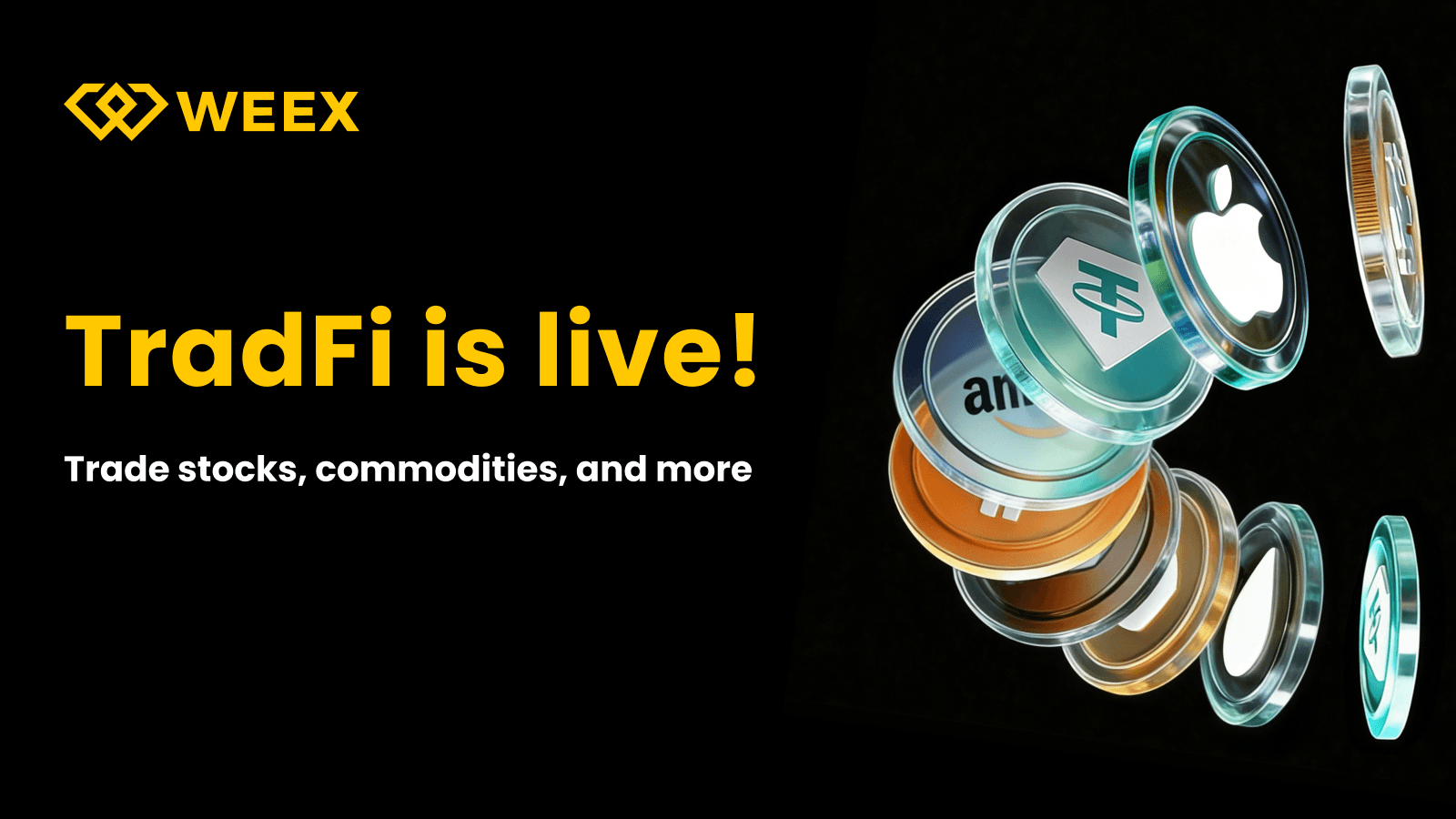
TradFi is no longer just a term crypto communities use to describe the "other side" of finance. With platforms like WEEX TradFi now letting users trade crude oil futures, gold, and US stocks directly from a USDT account, and a $150,000 bonus pool currently live for crude oil traders — the barrier between traditional markets and crypto is lower than it has ever been. This guide explains what TradFi is, how it differs from DeFi, what drives crude oil prices, and how to start trading these assets on WEEX with zero fees.
What Is TradFi?
TradFi — short for Traditional Finance — refers to the conventional global financial system: equity markets, commodity exchanges, fixed income, forex, and the banks, brokerages, and clearinghouses that operate within it. When traders use the term, they generally mean assets and markets that predate blockchain: crude oil futures on the CME, gold priced through the LBMA, equities on the NYSE or Nasdaq, or currency pairs traded through prime brokers.
In contrast, DeFi (Decentralized Finance) describes financial protocols built on public blockchains — permissionless, non-custodial, and accessible to anyone with a crypto wallet and an internet connection.
For most of the past decade, these two worlds operated in near-complete parallel. Accessing TradFi assets required a separate brokerage account, fiat banking infrastructure, and in many cases geographic eligibility. Crypto traders who wanted exposure to crude oil or gold had to step entirely outside the crypto ecosystem to get it.
DeFi vs TradFi: Key Structural Differences
| TradFi | DeFi | |
| Access | Brokerage account, bank deposit required | Crypto wallet only |
| Trading hours | Exchange sessions (weekdays) | 24/7 |
| Settlement | T+1 to T+2 | Minutes or near-instant |
| Custody | Broker or clearinghouse | Self-custody possible |
| Fees | Commissions, spreads, exchange fees | Protocol fees (variable) |
| Transparency | Regulated disclosure cycles | On-chain, real-time |
| Counterparty risk | Broker / clearinghouse | Smart contract risk |
Neither model is inherently superior. TradFi offers deep liquidity, regulatory oversight, and mature price discovery for established assets. DeFi offers composability, accessibility, and full self-custody. The convergence of the two — TradFi assets traded on crypto rails — is where much of the current product innovation is focused.
What Is TradFi in Crypto?
"TradFi in crypto" refers to products that give crypto users direct exposure to traditional assets — commodities, equities, forex, indices — without leaving the crypto ecosystem. Instead of wiring fiat to a brokerage and opening a separate account, users deposit USDT and trade TradFi-linked perpetual contracts in the same environment they already use for BTC or ETH futures.
This is possible today because stablecoin liquidity has reached a depth sufficient to support meaningful markets in commodity-linked perpetuals, and because crypto exchanges have built the settlement, risk management, and fee infrastructure needed to offer these products at scale.
For traders in regions with limited access to traditional brokerages — across Southeast Asia, the Middle East, and Latin America in particular — this opens exposure to global asset classes that were previously out of reach.
Understanding Crude Oil as a Trading Asset
Crude oil is one of the most actively traded commodities in global markets and, for crypto-native traders stepping into TradFi, it represents one of the most accessible entry points. Unlike equities, crude oil trades primarily on macroeconomic and geopolitical fundamentals — making it easier to build a systematic analytical framework around.
The two global benchmarks.
WTI (West Texas Intermediate) is the primary pricing benchmark, traded on the CME. Brent crude is the international benchmark, more commonly referenced in European and Asian markets. The two generally trade in close proximity but diverge based on regional supply logistics, pipeline constraints, and export policy.
What drives crude oil prices?
OPEC+ production policy is the single most influential factor in oil markets. The cartel controls a substantial share of global supply, and its production decisions — particularly surprise cuts or increases — can move WTI 3–5% in a single session. OPEC+ meetings are scheduled events and should be on every oil trader's calendar.
EIA weekly inventory data is published every Wednesday by the Energy Information Administration. The report covers crude oil stocks, gasoline inventories, and refinery utilization. A larger-than-expected inventory build signals oversupply and is generally bearish; a draw signals tighter supply conditions and tends to be bullish. This is the most reliable recurring volatility catalyst in crude oil — one that active traders prepare for each week.
The USD relationship. Crude oil is priced in dollars globally. A strengthening dollar makes oil more expensive for buyers in other currencies, typically suppressing demand and exerting downward pressure on price. Conversely, dollar weakness tends to support oil prices. This creates a direct link between Federal Reserve policy expectations and crude oil direction — worth monitoring during FOMC cycles.
Geopolitical risk. Supply disruptions from major producing regions — the Middle East and so on historically generate sharp upward price spikes. These moves are difficult to predict in timing but tend to be significant in magnitude. Traders who monitor geopolitical developments in oil-producing regions and maintain positions sized for event risk can benefit from these dislocations.
Demand signals from China. China is the world's largest crude oil importer. Industrial PMI readings, refinery throughput data, and import figures all serve as leading indicators of Chinese oil demand. Softening Chinese data has been a recurring bearish signal in recent years; demand recovery tends to support prices meaningfully.
Seasonality. summer driving season (June–August) and winter heating demand (November–February) create predictable seasonal patterns in crude oil prices. These aren't reliable on a year-to-year basis in isolation, but they provide useful context when combined with supply and macro signals.
Volatility profile.
WTI crude oil has historically exhibited annualized volatility in the 30–50% range, with spikes significantly higher during supply shocks — the 2020 COVID demand collapse and the 2022 escalation being the most recent examples. This is higher than gold or major equity indices, but considerably lower than most crypto assets. For traders accustomed to crypto volatility, crude oil offers a fundamentals-driven market with more predictable catalysts and less sentiment-driven noise.
Perpetual contracts vs traditional futures.
Traditional crude oil futures on the CME have fixed expiry dates — traders must roll positions forward before expiry or take physical delivery. WEEX TradFi uses a perpetual contract structure: no expiry, no rollover, settled in USDT. The contract price stays anchored to the underlying reference price via a funding rate mechanism, where longs or shorts pay each other periodically based on the premium or discount of the perpetual to spot. This is the same structure crypto traders already know from BTC and ETH perpetuals.
Crude Oil Trading Hours: Traditional Markets vs WEEX TradFi
On the CME, WTI crude oil futures trade Sunday through Friday from approximately 6:00 PM to 5:00 PM ET, with a 60-minute daily maintenance break. The highest-liquidity windows are during market hours (9:30 AM – 3:00 PM ET) and the London open overlap. Weekends are entirely closed.
On WEEX TradFi, crude oil perpetuals trade 24/7 with no session cutoffs. Spreads and liquidity follow the same general pattern as traditional markets — tightest during European session overlaps, wider during Asian off-hours — but there are no hard restrictions on when positions can be opened or closed.
For traders in UTC+8 to UTC+10 time zones, this removes a structural barrier. The best crude oil liquidity windows on traditional exchanges correspond to 10 PM – 4 AM local time in East Asia. WEEX TradFi eliminates that constraint.
Crude Oil Trading Strategies for Perpetual Futures
Macro event positioning. OPEC+ decisions, EIA inventory releases, and Fed meetings are all scheduled events with predictable crude oil volatility. Traders who maintain a macro calendar can position ahead of or immediately following these catalysts. The discipline is in sizing — leverage amplifies the move in both directions, and high-impact events can produce gaps that skip past intended stop levels.
Technical range trading.
Between macro catalysts, crude oil often consolidates within well-defined price ranges, particularly during periods when the supply/demand outlook is stable. Range traders enter near identified support levels and exit near resistance, relying on oil's mean-reversion tendency outside of trend periods. With 0% trading fees currently active on WEEX, the economics of range trading are materially improved — removing the per-trade commission cost that erodes returns on high-frequency round trips.
Correlation and hedging.
Crude oil's negative correlation with the USD index (DXY) makes it a natural complement to portfolios with USD exposure. A trader holding USD-sensitive assets — tech equities, for example — might take a long crude oil position as a partial hedge against USD weakness. Similarly, crude oil's divergence from crypto during risk-off events can serve a diversification function within a crypto-heavy portfolio.
Positioning data as a contrarian indicator.
The CFTC Commitments of Traders (COT) report, published weekly, discloses the net positioning of commercial hedgers and large speculators in crude oil futures. Historically, extreme speculative positioning — heavily net long or net short — has preceded reversals. Tracking the COT is a free, systematic way to gauge market sentiment and identify potential turning points in crude oil.
Risk management.
Crude oil's volatility means that even modest leverage creates meaningful intraday P&L swings. A standard risk management framework: calculate position size based on the distance to stop-loss, and risk no more than 1–2% of total account equity on any single trade. Many experienced commodity traders use far less than the maximum leverage available to them — the goal is to stay in the trade through normal fluctuations, not to maximize exposure.
WEEX TradFi: Product Overview
WEEX TradFi gives crypto users access to crude oil, gold, silver, and tokenized stocks through a single USDT-margined account. No brokerage relationship, no fiat wire, no separate account — positions open directly from an existing WEEX futures or spot balance.
| Available products | Crude oil (WTI perpetuals), gold (XAUT, PAXG), silver (XAG), tokenized stocks, global indices |
| Margin currency | USDT only |
| Leverage | Up to 400× on gold/silver; up to 50× on tokenized stocks; competitive tiers on crude oil |
| Trading fees | 0% (current promotion) |
| Account requirements | No separate account — trade from existing WEEX balance |
| Availability | 24/7, mobile and desktop |
Current Promotions
Trade Crude Oil, Share $150,000
Running April 16 – May 16, 2026 (UTC+8). Active crude oil traders on WEEX TradFi share a $150,000 bonus pool. Allocation is based on trading volume during the promotion period.
Zero trading fees on crude oil, gold, silver, and stock contracts. Higher trading volume during the promotion extends the zero-fee period.
For active traders, combining a $150,000 incentive pool with zero-fee execution represents a meaningful advantage over traditional commodity platforms, where round-trip commissions and exchange fees typically run 5–15 basis points per trade.
Getting started:
- Create or log in to your WEEX account
- Deposit USDT (on-chain, OTC, or internal transfer)
- One-click transfer to TradFi — no separate account setup required
- Open a crude oil perpetuals position
Frequently Asked Questions
What is TradFi and what products does WEEX support?
TradFi refers to traditional financial assets. WEEX TradFi offers perpetual contracts on gold (XAUT, PAXG), silver (XAG), crude oil, tokenized stocks, and global indices — all settled in USDT.
Is there a separate TradFi account on WEEX?
No. You trade directly from your existing WEEX spot or futures USDT balance. No separate onboarding is required.
What margin currency is supported?
USDT only. No fiat deposits or other crypto assets are required as margin.
How does the funding rate work on TradFi perpetuals?
TradFi perpetuals use the same funding rate mechanism as crypto perpetuals. Longs and shorts exchange funding periodically based on the premium or discount of the contract price to the underlying reference price. This is a cost (or income) to factor into multi-day positions.
What leverage is available on crude oil?
WEEX offers competitive leverage tiers on crude oil perpetuals. Gold (XAUT, XAG) supports up to 400×; tokenized stocks up to 50×. Using maximum available leverage is not recommended for most strategies — position sizing relative to stop distance is a more reliable risk framework.
What are crude oil futures trading hours on WEEX?
24/7, with no hard session cutoffs. Liquidity and spreads are tightest during and European market session overlaps.
Is WEEX a good crude oil trading platform for crypto users?
WEEX TradFi is purpose-built for crypto-native traders who want commodity and equity exposure without leaving the crypto ecosystem. The combination of USDT settlement, 0% fees, 24/7 access, and no brokerage requirement makes it a practical option for traders already familiar with perpetual futures.
Summary
TradFi and crypto are converging structurally — and crude oil is one of the clearest entry points for crypto traders looking to diversify into real-world asset markets. The fundamental drivers of crude oil prices are more systematic than most crypto assets: OPEC+ policy, EIA inventory data, dollar strength, and geopolitical risk are all trackable, scheduled, and well-documented.
What Can You Trade on WEEX TradFi?
| Asset | Type | Available on WEEX TradFi |
| Crude Oil | Commodity | ✅ |
| Gold | Commodity | ✅ |
| Silver | Commodity | ✅ |
| Stocks | Tokenized Stocks | ✅ |
| Indices | Global Indices | ✅ |
WEEX TradFi removes the friction that previously kept these markets separate. With 0% trading fees currently active across all TradFi products, and a $150,000 bonus pool for active crude oil traders running through May 16, 2026, the platform offers a practical, low-cost entry point for exploring crude oil perpetuals with the same tools and account infrastructure you already use for crypto.
Disclaimer: Futures trading involves significant risk of loss and is not suitable for all investors. Leverage amplifies both gains and losses. Past market performance does not guarantee future results. Please trade responsibly.
You may also like
Former ByteDance employee's account: How I started with two Pinduoduo hard drives and made six times the profit with Seagate to achieve financial freedom?
A programmer from a big tech company bought hard drives on Pinduoduo and, following clues, managed to accurately capture the sixfold rising stock Seagate using the "finding daily anomalies + 13F institutional verification" framework, making a wild profit of $400,000 and achieving financial freedom.
MiCA reshuffle begins, Binance temporarily bids farewell to the EU
What Binance leaves behind is not scattered retail investors, but a whole batch of high-value users who are forced to liquidate and have almost nowhere to go.
How does Gate redo "buying and selling stocks" from the cryptocurrency world to the stock market?
The competition logic of exchanges has changed.
Visa and Mastercard join 140 giants to launch a new stablecoin, but the impact on the market landscape may still be limited
As an important milestone event in the stablecoin landscape, OUSD is likely to change the existing stablecoin landscape and significantly increase the adoption rate of stablecoins in the global financial system.
Circle CEO responds to OUSD's challenge: Stablecoins are a winner-takes-all business, and we will not slow down
OUSD was jointly launched by more than 140 giants, causing Circle's stock price to plummet in a single day. Circle's CEO personally wrote a response, clarifying USDC's moat from three aspects: network effects, liquidity, and regulation, and dismantling OUSD's three selling points of "free redemption...
Argentina vs Cape Verde: When a Record-Breaking Legend Meets an Unbreakable Underdog
WEEX exclusive pre-match analysis of Argentina vs Cape Verde, exploring Messi-led Argentina’s dominance and Cape Verde’s historic defensive breakout, with a breakdown of volatility, structure, and match dynamics.
WEEX Launches Depth Chart for Spot Trading
WEEX Spot now supports Depth Chart, helping users visualize buy and sell orders, spot liquidity walls, and understand market depth more clearly before placing trades.
Raising interest rates to protect STRC and selling coins to maintain credit, this time the strategy has chosen the two most expensive paths
The rebound in BTC prices can make all problems simple.
Morning Report | Samsung announces a 265.5 trillion won investment plan, focusing on semiconductor and AI computing power data centers; Vitalik publishes an article detailing the entire technology tree behind the confusion protocol (iO) mainline
Overview of Important Market Events on June 29
In the era of AI, what is left of Bitcoin?
AI can generate a fake image, create a fake video, and even forge a person's voice. But it cannot make the entire Bitcoin network acknowledge a non-existent transaction out of thin air.
NeoSoul announced plans to integrate with the OKX Agentic Wallet, promoting AI agents' participation in the on-chain economy
After the integration is complete, the AI entity will be able to manage on-chain assets, pay service fees, and perform related on-chain operations.
Why Is Bitcoin Lagging Stocks in 2026? AI Stocks, ETF Outflows, and the Nasdaq Rally Explained
Stocks are hitting record highs while Bitcoin continues to lag. Discover why AI stocks are attracting institutional capital and what it means for crypto traders.
What you bought on CEX is really not US stocks: Analyzing the 94% liquidation monopoly and the evaporation of equity under a five-layer pipeline
Peeling back its smooth trading interface to examine the underlying legal relationships and settlement processes, you will find that this is far from a simple "RWA asset revolution," but rather a complex game of interests involving spot pricing, rights ownership, and the monopoly of underlying custo...
In such a crowded cross-border payment arena, where is the next stop for the future?
Only by stepping into the mud can one have the chance to touch gold.
Why Is Bitcoin Down in 2026? What We Can Learn From 2022
Why is Bitcoin down in 2026? Bitcoin has just recorded its worst first half since 2022, with back-to-back quarterly losses, record ETF outflows, and extreme fear. Here's what history says, how 2026 differs from the last bear market, and the three signals traders should wat
The large models in the United States are moving towards closure in the name of security
The government successfully inserted itself as an approver between commercial AI models and their users for the first time.
From the white-haired stock god to the billionaire fund mogul, the smart people shorting Nvidia are all getting rich using the same framework
Give up on heavily investing in Nvidia's "nine major bottlenecks"! This article analyzes the underlying logic behind top AI investors making billions: physical infrastructure such as electricity, HBM, and optical interconnects are the true keys to wealth in AI hardware.
Morning Report | CoinEx becomes a key hub for Iran to evade sanctions, involving over $3.8 billion in funds; Kalshi seeks a new round of financing, with a valuation potentially rising to $40 billion
Overview of Important Market Events on June 25
Former ByteDance employee's account: How I started with two Pinduoduo hard drives and made six times the profit with Seagate to achieve financial freedom?
A programmer from a big tech company bought hard drives on Pinduoduo and, following clues, managed to accurately capture the sixfold rising stock Seagate using the "finding daily anomalies + 13F institutional verification" framework, making a wild profit of $400,000 and achieving financial freedom.
MiCA reshuffle begins, Binance temporarily bids farewell to the EU
What Binance leaves behind is not scattered retail investors, but a whole batch of high-value users who are forced to liquidate and have almost nowhere to go.
How does Gate redo "buying and selling stocks" from the cryptocurrency world to the stock market?
The competition logic of exchanges has changed.
Visa and Mastercard join 140 giants to launch a new stablecoin, but the impact on the market landscape may still be limited
As an important milestone event in the stablecoin landscape, OUSD is likely to change the existing stablecoin landscape and significantly increase the adoption rate of stablecoins in the global financial system.
Circle CEO responds to OUSD's challenge: Stablecoins are a winner-takes-all business, and we will not slow down
OUSD was jointly launched by more than 140 giants, causing Circle's stock price to plummet in a single day. Circle's CEO personally wrote a response, clarifying USDC's moat from three aspects: network effects, liquidity, and regulation, and dismantling OUSD's three selling points of "free redemption...
Argentina vs Cape Verde: When a Record-Breaking Legend Meets an Unbreakable Underdog
WEEX exclusive pre-match analysis of Argentina vs Cape Verde, exploring Messi-led Argentina’s dominance and Cape Verde’s historic defensive breakout, with a breakdown of volatility, structure, and match dynamics.



Customer Support:@weikecs
Business Cooperation:@weikecs
Quant Trading & MM:bd@weex.com
VIP Program:support@weex.com
