
Selling 69,000 Bitcoins? How Will the Silk Road’s Bitcoin Sale Impact the Market?


Just ten days after the U.S. government once again committed to providing $6 billion in military aid to Ukraine, the U.S. Department of Justice is preparing to initiate the liquidation of a substantial Bitcoin asset.
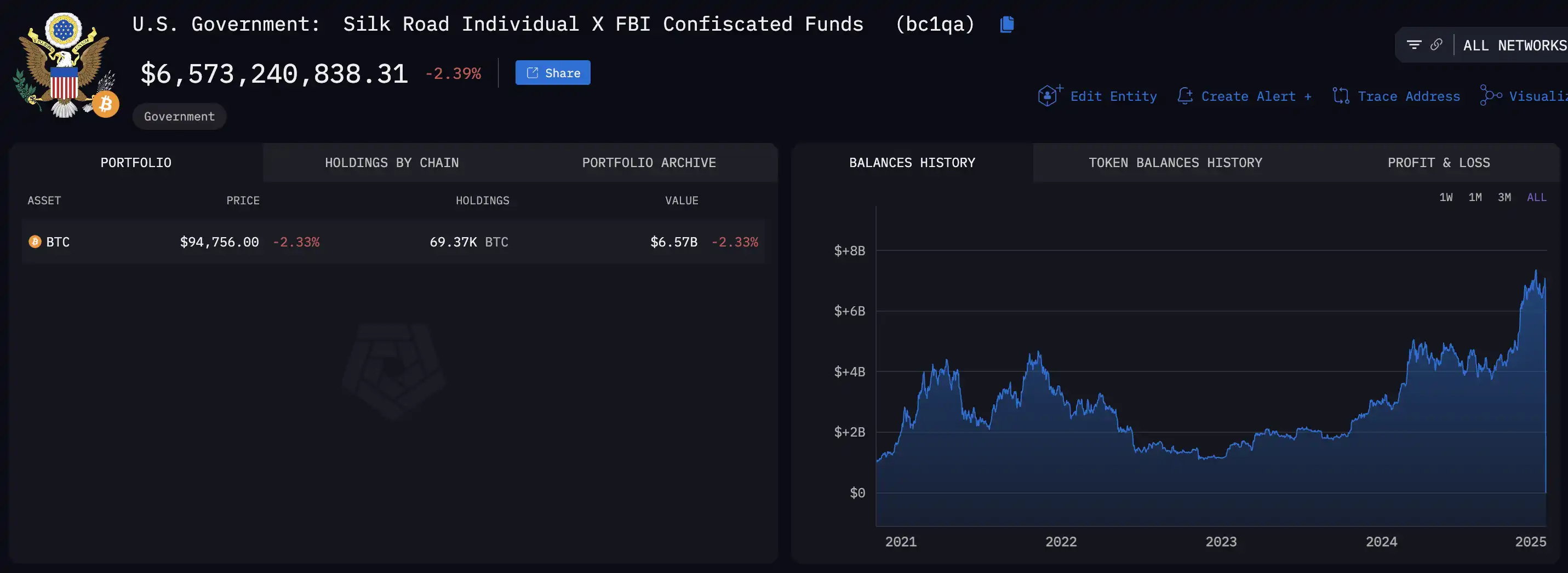
On January 9, an official confirmed to DB News that the Department of Justice has been authorized to dispose of 69,370 Bitcoins seized in relation to the infamous Silk Road case. The current market value of this asset is approximately $6.5 billion.
It is reported that the Department of Justice has requested permission to sell these assets citing Bitcoin price volatility. When asked about the next steps, a Department of Justice spokesperson stated, "The government will take the next steps based on the judgment in this case."
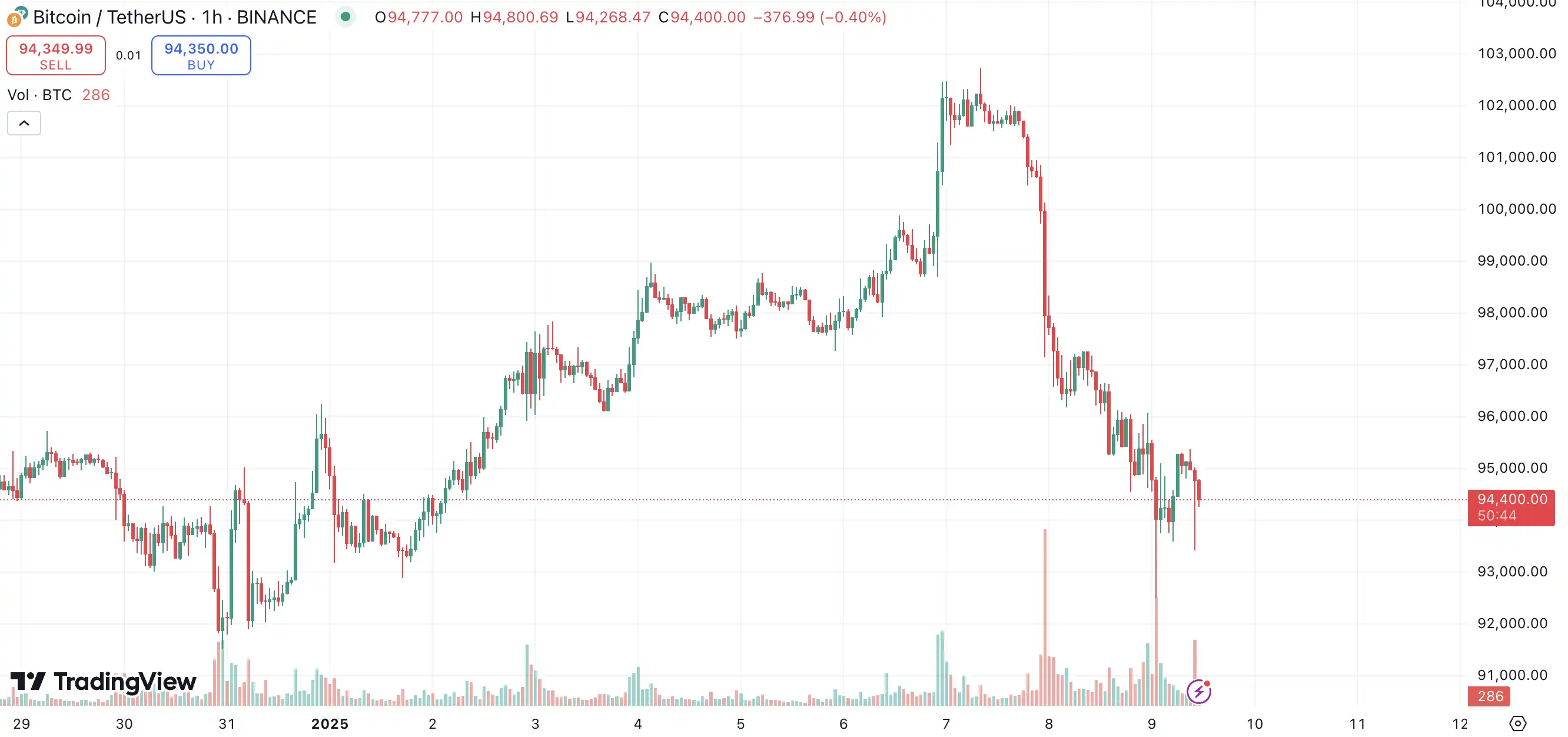
Following the news, Bitcoin plunged over 2.5% in 24 hours, with the price standing at $94,400 at the time of writing.
One of Bitcoin's historically influential development milestones: Silk Road
In October 2013, a young man named Ross Ulbricht was arrested in a San Francisco library, known by his alias "Dread Pirate Roberts" (DPR), signaling the end of the once-thriving drug and weapon trading website known as the "Silk Road." In 2015, Ross Ulbricht was sentenced to life in prison.

This darknet born in 2011 initially operated as an "eBay-like model" offering various illicit goods and services, such as drugs, fake IDs, hacking tools, etc. Due to the anonymity of the dark web and Bitcoin as the primary payment method, the Silk Road quickly grew and became one of the most famous and largest illegal markets on the dark web.
From 2012 to 2013, U.S. law enforcement agencies such as the FBI and the DEA began closely monitoring the Silk Road, deploying undercover agents. Due to the platform's frequent transactions, large scale, and involvement in illegal activities across multiple countries, U.S. law enforcement agencies identified it as a key target for crackdown.
During the FBI's investigation of the Silk Road case, approximately 170,000 Bitcoins were seized from various locations such as the platform's servers and Ross Ulbricht's personal digital wallets, marking one of the largest Bitcoin enforcement seizures in history at that time.
When arresting Ross Ulbricht, law enforcement gained access to relevant encrypted wallets through the seized laptop and server information on-site. Since Bitcoin transactions require private keys for transfer, once law enforcement has valid private keys, they can move the corresponding Bitcoin from the suspect's address to an official "custodial" wallet.
The U.S. Government Is Not Selling Bitcoin for the First Time
Since 2014, the U.S. government has held multiple auctions to sell the Bitcoin seized in the "Silk Road" case, and the timeline and impact on the market price are worth revisiting.
In June 2014, the U.S. government held its first public auction of the Bitcoin seized in the Silk Road investigation. The U.S. Marshals Service auctioned off about 30,000 bitcoins. Bidders included many institutional and individual investors, with prominent investor Tim Draper winning bids multiple times. In subsequent auctions, the government sold the remaining bitcoins in multiple batches.
After the auction, the price of Bitcoin remained stable around $600 and did not experience a "cascade" event. The active participation of institutional investors in the auction process reinforced Bitcoin's "legitimacy" attribute to some extent.
In December 2014, the second round of auctions involved 50,000 bitcoins, nearly double the scale of the first auction. Market expectations were similarly pessimistic. However, after the dust settled from the auction, Bitcoin continued to fluctuate in the $300 to $400 range without experiencing a continuous plunge.
In March 2015, another 50,000 bitcoins were auctioned off, by which time Bitcoin had already rebounded from its previous low. The prior market panic further subsided, and the price stabilized quickly in the $280 to $300 range after minor fluctuations.
In November 2015, the U.S. government's auctions of hundreds of thousands of bitcoins accumulated by the end of the year did not trigger significant market turmoil. On the contrary, due to continuous bidding by buyers, these auctions were interpreted as a symbol of Bitcoin gradually gaining more "legitimate investment" status.
Until today, the U.S. Department of Justice has been authorized to liquidate the remaining 69,370 BTC (valued at about $6.5 billion) seized in the Silk Road case, and the wallet address associated with the Silk Road, "bc1qa5," has remained dormant for over 4 years.
Based on past sales history, Bitcoin's price may experience temporary price panic, but in the long term, since the U.S. government has often conducted OTC auctions in the past, it may not sell at market price, and the negative impact on Bitcoin's price is unlikely to last long.
Trump's Pardon and Bitcoin Reserve Commitment May Postpone Sales?
In May 2024, during Trump's presidential election campaign, at the Libertarian National Convention held in Washington, D.C., he pledged that if re-elected as president, he would commute the sentence of Silk Road founder Ross Ulbricht on the first day. On July 28, at the Bitcoin 2024 conference, Trump stated that he once again pledged that after being elected president, he would commute the sentence of Silk Road founder Ross Ulbricht.
On November 14, Ross William Ulbricht made his first post on the X platform after the U.S. election, stating, "I sincerely thank all those who voted for President Trump. I believe he will fulfill his promise and give me a second chance. After more than 11 years in the dark, I finally see the dawn of freedom at the end of the tunnel. Thank you very much."
As of now, the prediction market on PolyMarket regarding "Will the U.S. government sell Bitcoin before Trump's inauguration?" has become a popular bet, with a trading volume of $136,310 and a 22% probability of selling Bitcoin before Trump's inauguration.
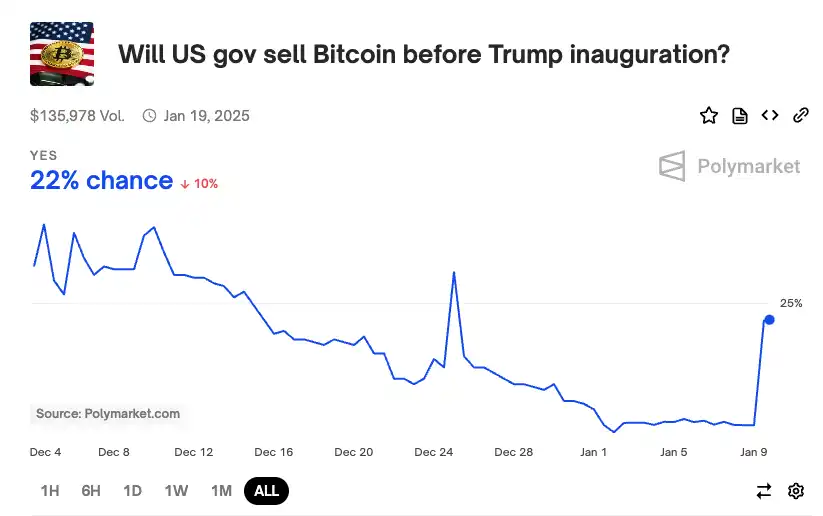
Given Trump's previous promise to commute the sentence of the 'Silk Road' founder Ross and his reiterated commitment to make the U.S. the world's cryptocurrency capital, embracing cryptocurrency.
Therefore, most people believe that Ross may be commuted or even pardoned. Likewise, in the PolyMarket topic "Who will President Trump pardon within 100 days of taking office?" the probability of Ross being pardoned is very high at 73% as of now.
Due to Trump's Bitcoin reserve commitment, if the U.S. government does not sell before Trump's official inauguration on January 20, there is speculation in the market that the seized Bitcoin from the Silk Road case may not be sold.
How Much Bitcoin Does the U.S. Government Own?
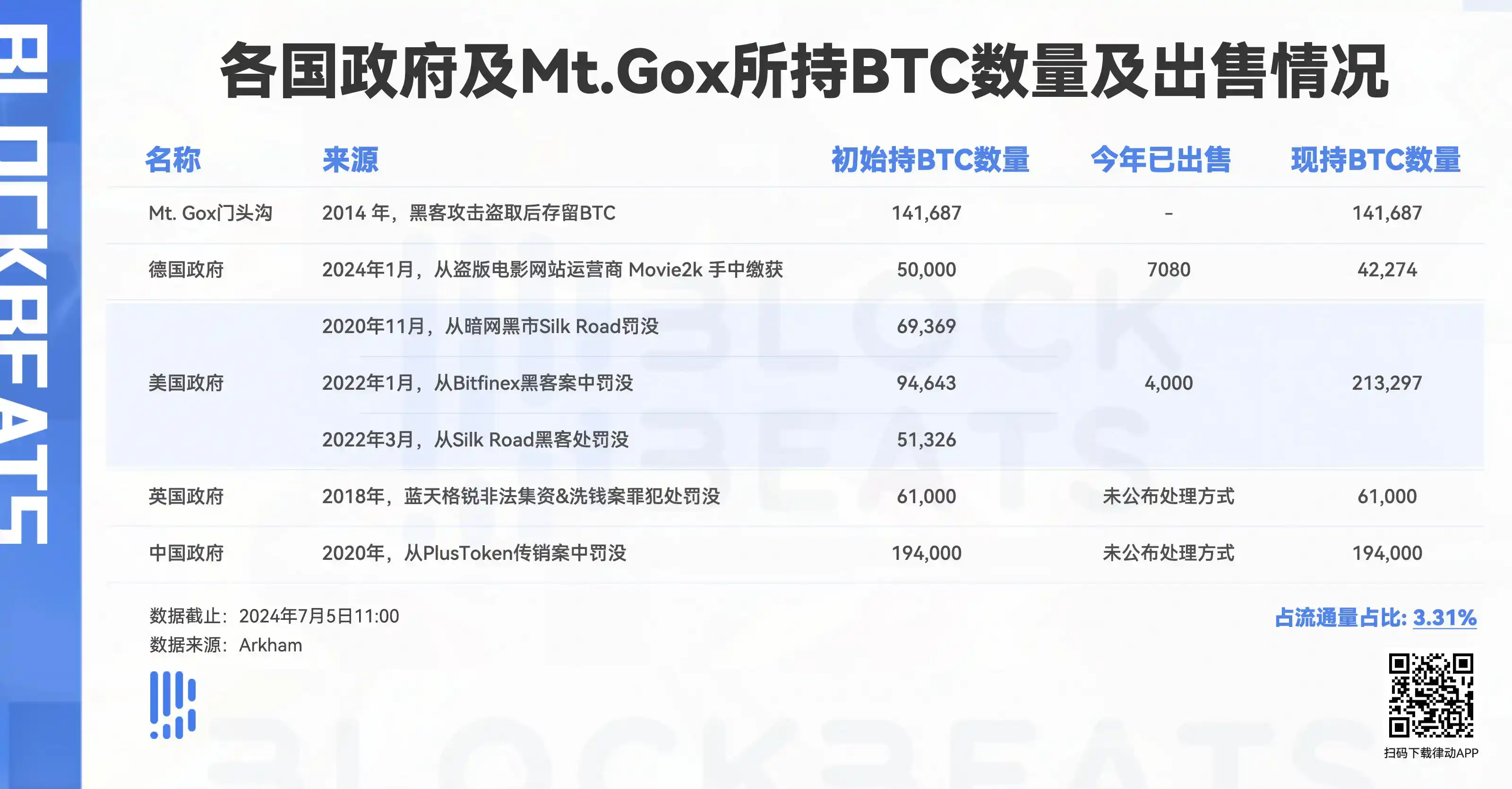
According to Bitcoin Treasuries data, the U.S. government holds 207,189 bitcoins, accounting for 0.987%. Based on the current Bitcoin price, the total value of Bitcoin held by the U.S. government is $19,544,018,200.
You may also like

Every exchange is a "Universal Exchange."

The counterattack of traditional finance: Alliance chains are quietly reviving

Bitcoin Falls Below 200-Week Moving Average as On-Chain Data Shows Over Half of Supply in Loss
Bitcoin dropped below its 200-week moving average as on-chain data showed over 50% of circulating supply is now in loss, signaling rising market stress.

CFTC Reportedly Plans New Prediction Market Rules Focused on Manipulation Risk and Public Interest Review
The CFTC is reportedly preparing new prediction market rules focused on manipulation risk, public interest review, and retail trader protections.

Meet the new WEEX trial fund—your gateway to greater profits

WEEX Labs Lands at Dutch Blockchain Week: A Disruptive Crypto × AI Conversation Sets Sail in Amsterdam

SK Hynix Reportedly Plans U.S. ADR Listing as Early as August, With SEC Approval Possible in Late June
SK Hynix may pursue a U.S. ADR listing as early as August, with SEC approval reportedly possible in late June amid strong AI chip supply chain demand.

SpaceX vs Tesla vs xAI: Which Elon Musk Trade Has the Biggest Upside in 2026?
OpenAI Reveals It Has Confidentially Submitted an S-1 to the SEC, Keeping the Door Open for a Future IPO
On June 9, according to an OpenAI announcement, the company recently confidentially submitted a draft S-1 registration statement to the U.S. Securities and Exchange Commission (SEC), beginning the preliminary compliance process for a potential initial public offering. OpenAI said it chose to disclose this proactively because it expected the news might leak; however, the company has not yet set a specific listing timeline, and related arrangements may still take some time.

Latest research from 13 top universities including Cornell University: The current state, challenges, and misconceptions of the fusion of Crypto and AI
Deconstructing Anthropic: The Best AI Company, Possibly Also a Type of Organizational Invention
Apollo and Blackstone Reportedly Back $35 Billion Anthropic Chip Financing as Deal Details Remain Unclear
On June 9, according to currently available news alerts, Apollo and Blackstone Group participated in a $35 billion financing for an Anthropic “chip project.” Based on the original wording of the report, the funding has already been raised, but public information remains limited. The financing structure, use of proceeds, project entity, and whether Apollo and Blackstone participated through equity, debt, or project financing have not yet been disclosed.

Humanity Protocol Security Incident Escalates: More Than $31 Million Stolen From Related Addresses as Attacker Continues Selling H for ETH
On June 9, according to monitoring by Onchain Lens, more than $31 million has been stolen from addresses linked to Humanity Protocol, and the attack is still ongoing, with the hacker continuously swapping H tokens for ETH. Project founder Terence Kwok later confirmed the security incident on X, saying the issue involved a private key leak.

Bloomberg: As Bitcoin Weakens, Stablecoins and RWA Continue to Drive Expansion in Crypto Businesses
In June, Bloomberg reported that despite Bitcoin falling below $60,000 last week, wiping out about $235 billion in market value within seven days, and dropping close to 50% from last year’s peak, some core businesses in the crypto industry are still expanding, mainly in stablecoins, real-world asset tokenization (RWA), payments, and infrastructure. The report also noted that overall altcoin activity has contracted significantly: altcoin market capitalization has fallen from a peak of about $431 billion in November 2021 to around $170 billion, and among the tens of millions of tokens issued in recent years, fewer than 1,700 still maintain meaningful trading activity.

Galaxy Deep Research Report: How Hyperliquid's HIP-4 Upgrade Changes the Landscape of Prediction Markets?
Binance Research: RWA Market Expected to Expand Nearly 6x from Early 2025, with Public Equities and Onchain Payments Heating Up Together
In June, Binance Research said in its monthly market report that the real-world asset (RWA) market is expected to grow by about 589% from the beginning of 2025. Bond- and money market fund-related RWA expanded by about $6.5 billion, up 83% year over year, while publicly traded equity RWAs grew by about 422%. The report also noted that monthly crypto debit card transaction volume exceeded $747 million in May, up 48.6% year to date.

Japan to Assess a Framework for Yen Stablecoins and Crypto ETFs as Asia’s Compliant Payments Narrative Heats Up
Recently, according to the original report, Japan is considering the launch of yen stablecoins and cryptocurrency ETFs. Public information remains limited at this stage, and there is still no complete policy text, regulatory draft, or clear implementation timeline, so this is better characterized as a “policy discussion” rather than formal implementation. The original wording also noted that advancing stablecoin regulation in Asia is driving XRP usage and supporting growth in the XRPL ecosystem. However, based on currently available public information, there is not enough evidence to directly establish a clear causal relationship between this round of discussion in Japan and XRP or XRPL.

ZachXBT: Humanity private key leak and abnormal surge in H token should be viewed separately
On June 9, according to related disclosures, on-chain investigator ZachXBT posted an update on Humanity’s roughly $31 million security incident, saying that after further analyzing fund flows, he currently tends to believe the project team was not involved in an “inside job” or a self-staged attack. According to him, the official explanation about the private key leak was broadly accurate, but before the token unlock, the price of H had been artificially pushed higher, and the hacker later took advantage of that market environment; therefore, the private key leak and the earlier abnormal price pumping should be regarded as two separate and independent events. This reframing has shifted the market’s understanding of the nature of the incident. Earlier discussion around Humanity had focused on whether the team directly participated in the attack or used the security incident to cover up internal operations. ZachXBT’s latest remarks shift the focus from “whether it was self-theft” to “whether there were pre-unlock market structure issues.” He also questioned whether the team may have.
Every exchange is a "Universal Exchange."
The counterattack of traditional finance: Alliance chains are quietly reviving
Bitcoin Falls Below 200-Week Moving Average as On-Chain Data Shows Over Half of Supply in Loss
Bitcoin dropped below its 200-week moving average as on-chain data showed over 50% of circulating supply is now in loss, signaling rising market stress.
CFTC Reportedly Plans New Prediction Market Rules Focused on Manipulation Risk and Public Interest Review
The CFTC is reportedly preparing new prediction market rules focused on manipulation risk, public interest review, and retail trader protections.
Meet the new WEEX trial fund—your gateway to greater profits
WEEX Labs Lands at Dutch Blockchain Week: A Disruptive Crypto × AI Conversation Sets Sail in Amsterdam


