
Do Kwon Pleads Not Guilty in U.S. Court, Faces Up to 130 Years in Prison


Original Title: "Do Kwon Extradited to the U.S. for Trial, Smiling but Not Pleading Guilty"
Original Author: jk, Odaily Planet Daily
On January 2nd local time in the U.S., Do Kwon, the former founder of Terra and co-founder of Terraform Labs, officially appeared in the public eye of the U.S. court. At a hearing in the Manhattan Federal Court, Do Kwon pleaded not guilty, and the case will proceed to trial.
Earlier, Odaily reported that Milojko Spajic, the Prime Minister of Montenegro, stated on Tuesday, "Montenegro has completed the extradition process of Do Kwon, co-founder of Terraform Labs, to the U.S." Spajic posted on Platform X, saying, "This extradition demonstrates our unwavering commitment to international justice and the rule of law."
Do Kwon faces charges in New York and Seoul related to the collapse of the $40 billion TerraUSD stablecoin in 2022. Last year, he was arrested in Montenegro for traveling with a forged passport. In April of this year, following a civil trial on charges by the U.S. Securities and Exchange Commission (SEC), Terraform and its founder Do Kwon were found guilty of fraud. Terraform has agreed to pay $4.5 billion to settle with the SEC.
Background: Terra Collapse, Do Kwon's Extradition, and Trial Outlook
Terra's Collapse
In May 2022, the Terra ecosystem experienced an unprecedented collapse in the history of cryptocurrency, with the value of its two core cryptocurrencies, TerraUSD (UST) and LUNA, nearly plummeting to zero, resulting in approximately a $40 billion loss.
UST was the flagship algorithmic stablecoin of that year, maintaining a 1:1 peg to the U.S. dollar through an algorithm and market incentive mechanism, while LUNA was the governance token supporting UST stability. However, in early May, as Terra's protocol upgrade and capital outflow occurred, UST lost its peg to the dollar, leading to a rapid price decline and triggering market panic. To address this crisis, Terraform Labs attempted to support the UST price through a reserve fund but was unsuccessful. Meanwhile, the dual-token mechanism of the Terra protocol led to the minting of a large amount of new LUNA, further depressing LUNA's price, creating a vicious cycle.
Ultimately, LUNA's price plummeted from a high of around $119 to almost zero, causing the entire ecosystem to collapse. Simultaneously, Terra's collapse triggered a market chain reaction, impacting other cryptocurrencies such as Bitcoin and leading to the complete loss of funds for millions of investors. Subsequently, algorithmic stablecoins almost disappeared from the market, directly causing subsequent primary market rug pulls like 3AC.
Extradition to the U.S. or South Korea?
Do Kwon was caught in a tug-of-war earlier this year: both the U.S. and South Korea wanted to try Do Kwon domestically. In March, it was rumored that Do Kwon would be extradited to South Korea, but the decision was postponed by the Supreme Court of Montenegro, eventually confirming his extradition to the U.S. in December.
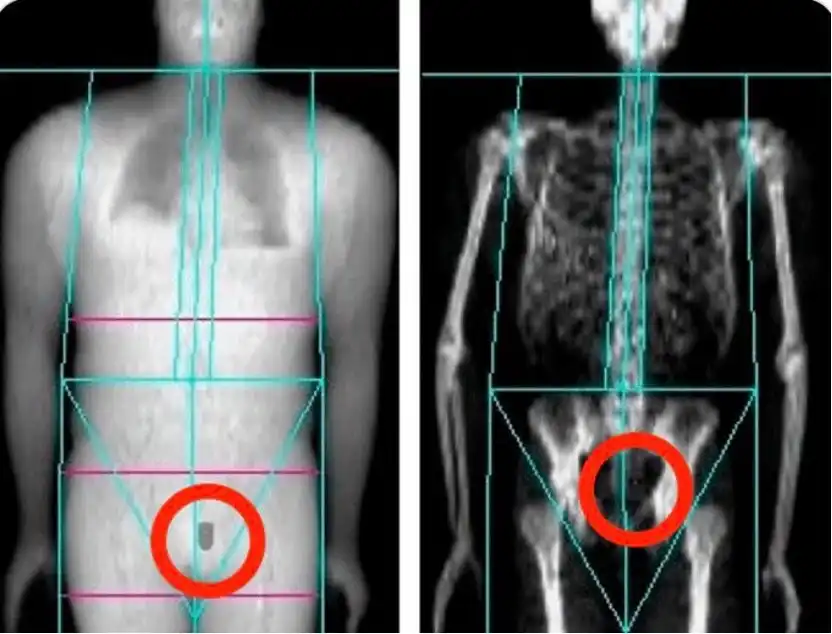
Previously, there were rumors in the market that when Do Kwon was arrested by Montenegrin police, a Trezor hardware cold wallet containing over 10,000 bitcoins was found in his rectum. Today, these bitcoins are worth over a billion dollars.
Source: X
Preview of the Trial Process
In court, Do Kwon pleaded not guilty to the charges against him. What will happen next?
Not guilty plea is a formal statement made by a defendant in a criminal case in the U.S. judicial system, indicating a denial of committing the crimes alleged. This does not mean the defendant is automatically declared innocent but requests the prosecution to provide sufficient evidence to prove the charges. The case will proceed to trial, where the court will determine the defendant's guilt.
On January 8, the case will be back in court.
Therefore, we will witness a courtroom drama similar to SBF's at the beginning of this year, from witness testimonies to the final judgment, revealing many insider details of the Terra collapse. Odaily will continue to track and report on this.
He Could Face 130 Years in Prison, but He Smiles
Do Kwon faces multiple charges. According to a press release from the U.S. Department of Justice's Public Affairs Office, the main charges against Do Kwon are as follows:
False Statements Made by Do Kwon:
· Stablecoin False Statement: Kwon falsely promoted the effectiveness of the "Terra protocol" system, which purportedly uses a computer algorithm to maintain the value of Terraform's so-called "stablecoin" TerraUSD (UST) at 1 US dollar-1 UST. However, Kwon knew that in May 2021, the Terra protocol failed to restore UST's 1 US dollar peg, and he reached an agreement with an executive of a high-frequency trading firm to have the firm purchase a large amount of UST to artificially support UST's 1 US dollar peg.
· LFG False Statement: Kwon falsely promoted the governance of Luna Foundation Guard Ltd. (LFG), claiming that the organization was managed by an independent governing body responsible for deploying billions of dollars in financial reserves to defend UST's peg. However, Kwon actually controlled LFG and Terraform, and misappropriated hundreds of millions of dollars of LFG assets.
· Mirror False Statement: Kwon falsely promoted the success of the Mirror protocol on the Terraform blockchain, which purportedly allows users to create, buy, and sell synthetic versions of stocks listed on US stock exchanges. However, Kwon and Terraform actually controlled Mirror and manipulated the prices of synthetic assets through automated trading bots.
· Chai False Statement: Kwon falsely claimed that the Terraform blockchain was used to process billions of dollars in financial transactions for the South Korean payment app Chai, when in reality, Chai used a traditional financial processing network.
· Founding Token False Statement: Kwon used the initially allocated 100 million founding stablecoins intended for reserves in fraudulent transactions, including manipulating Mirror asset prices.
Assistant United States Attorney for the Southern District of New York Daniel M. Gitner stated, "As alleged, this fraudulent conduct, along with the collapse of the Terraform cryptocurrency in May 2022, wiped out over $40 billion in investor assets, causing devastating losses to countless investors in the United States and globally. Kwon will now face justice in the Manhattan federal court."
However, according to Inner City Press, at today's hearing, 「Do Kwon was seen chatting with one of his lawyers, smiling broadly — evidently in good spirits.」

Do Kwon entering the courtroom. Source: Inner City Press
According to The Block, Kwon also faces civil charges filed by the U.S. Securities and Exchange Commission (SEC) in February 2023. The lawsuit between Terraform and the SEC started at the end of March, but he did not participate. In April, the jury ruled that Terraform and Kwon misled investors, were liable for civil fraud, and violated federal securities laws.
Kwon faces two counts of commodities fraud (each carrying a maximum sentence of 10 years), two counts of securities fraud (each carrying a maximum sentence of 20 years), two counts of wire fraud (each carrying a maximum sentence of 20 years), two counts of conspiracy (each carrying a maximum sentence of 5 years), and one count of money laundering conspiracy (carrying a maximum sentence of 20 years). If convicted on all charges, Do Kwon could face up to 130 years in prison, more than five times that of SBF.
You may also like

Galaxy Deep Research Report: How Hyperliquid's HIP-4 Upgrade Changes the Landscape of Prediction Markets?

ZachXBT: Humanity private key leak and abnormal surge in H token should be viewed separately
On June 9, according to related disclosures, on-chain investigator ZachXBT posted an update on Humanity’s roughly $31 million security incident, saying that after further analyzing fund flows, he currently tends to believe the project team was not involved in an “inside job” or a self-staged attack. According to him, the official explanation about the private key leak was broadly accurate, but before the token unlock, the price of H had been artificially pushed higher, and the hacker later took advantage of that market environment; therefore, the private key leak and the earlier abnormal price pumping should be regarded as two separate and independent events. This reframing has shifted the market’s understanding of the nature of the incident. Earlier discussion around Humanity had focused on whether the team directly participated in the attack or used the security incident to cover up internal operations. ZachXBT’s latest remarks shift the focus from “whether it was self-theft” to “whether there were pre-unlock market structure issues.” He also questioned whether the team may have.

Morning Report | OpenAI has submitted an S-1 registration statement draft to the U.S. SEC; Morpho completes $175 million financing

Morning Report | BitMine increased its holdings by 126,971 ETH last week; trader Eugene announced his exit from the crypto market

Wang Chuan: How can one not feel anxious after the neighbor Old Wang made thirty times profit by investing in storage stocks? (Seven) - A quarter-century cycle

Cryptocurrency CEXs are flocking to sell US stocks, and traditional brokerages are facing an "uninvited guest."
$75 billion in foreign capital has fled, and South Korean retail investors have absorbed it all using leverage

Japan’s Three Megabanks Plan Joint Stablecoin Issuance in Fiscal 2026
MUFG, SMBC, and Mizuho reportedly plan to jointly issue fiat-pegged stablecoins in fiscal 2026, signaling Japan’s growing push into bank-led digital payment infrastructure.

Humanity Discloses H Token Dual-Chain Attack Details, With Losses on Ethereum and BSC Exceeding $36 Million
Humanity said the H token attack across Ethereum and BSC caused more than $36 million in losses after leaked ProxyAdmin keys enabled malicious contract upgrades and token minting.
White House Discusses CLARITY Act With Law Enforcement Ahead of Senate Vote
The White House discussed the CLARITY Act with law enforcement ahead of a Senate vote, focusing on illicit finance risks and developer protections.

Bitcoin Trading Guide 2026: Strategies for Experienced Traders

What Is XAUT and PAXG? Why Tokenized Gold Is Booming in 2026

Will the SpaceX IPO Hurt Bitcoin? Here's What Traders Are Watching

Foreign selling in the South Korean stock market accelerates, with cumulative net sales reportedly reaching $75 billion this year
On June 9, The Kobeissi Letter, citing Goldman Sachs data, reported that global investors are selling South Korean stocks at an unusually rapid pace. In the latest trading session, foreign investors sold about $801 million worth of Kospi constituent stocks again; total foreign outflows last week reached about $10 billion, and the market has been in net foreign selling on nearly every trading day over the past month. According to the data cited in the report, foreign investors have sold about $75 billion worth of South Korean stocks so far this year. Meanwhile, South Korean retail and institutional investors together recorded roughly $69 billion in net buying over the same period, suggesting that the market’s main buying support has come from domestic capital rather than returning overseas funds. The information currently disclosed still mainly comes from The Kobeissi Letter’s retelling and Goldman Sachs data summaries, while public details on the statistical period and the specific definition of “selling” remain relatively limited.

Fortune Warns of Strategy’s Financing Structure Risks as Bitcoin Premium Narrows
Fortune warned that Strategy’s Bitcoin treasury model faces growing financing risks as MSTR’s net asset premium narrows and preferred stock dividend pressure increases.

Ferrari Challenge Le Mans: Carl Moon to Dominate in WEEX Livery

Sahara AI Responds to SAHARA’s Sharp Drop: No Contract or Product Security Issues Found, Internal Investigation Underway
Sahara AI responded to SAHARA’s 60% price drop, saying no token contract or product security issues have been found and an internal investigation is underway.

WEEX Deposit/Withdrawal Dynamic Island: Your Asset Status, Always in Sight
Galaxy Deep Research Report: How Hyperliquid's HIP-4 Upgrade Changes the Landscape of Prediction Markets?
ZachXBT: Humanity private key leak and abnormal surge in H token should be viewed separately
On June 9, according to related disclosures, on-chain investigator ZachXBT posted an update on Humanity’s roughly $31 million security incident, saying that after further analyzing fund flows, he currently tends to believe the project team was not involved in an “inside job” or a self-staged attack. According to him, the official explanation about the private key leak was broadly accurate, but before the token unlock, the price of H had been artificially pushed higher, and the hacker later took advantage of that market environment; therefore, the private key leak and the earlier abnormal price pumping should be regarded as two separate and independent events. This reframing has shifted the market’s understanding of the nature of the incident. Earlier discussion around Humanity had focused on whether the team directly participated in the attack or used the security incident to cover up internal operations. ZachXBT’s latest remarks shift the focus from “whether it was self-theft” to “whether there were pre-unlock market structure issues.” He also questioned whether the team may have.
Morning Report | OpenAI has submitted an S-1 registration statement draft to the U.S. SEC; Morpho completes $175 million financing
Morning Report | BitMine increased its holdings by 126,971 ETH last week; trader Eugene announced his exit from the crypto market
Wang Chuan: How can one not feel anxious after the neighbor Old Wang made thirty times profit by investing in storage stocks? (Seven) - A quarter-century cycle
Cryptocurrency CEXs are flocking to sell US stocks, and traditional brokerages are facing an "uninvited guest."


