
Cryptocurrency Asset Valuation Model Exploration





Original Title: "Exploring Cryptocurrency Valuation Models"
Original Author: 0xCousin, IOBC Capital
Crypto has become one of the most dynamic and promising sectors in the fintech industry. With numerous institutional funds entering the space, how to properly value Crypto projects has become a key issue. Traditional financial assets have mature valuation systems, such as Discounted Cash Flow (DCF) Model, Price/Earnings (P/E) Valuation Method, etc.
Crypto projects are diverse, including public blockchains, CEX platform coins, DeFi projects, meme coins, etc., each with their own characteristics, economic models, and Token utility. It is necessary to explore valuation models that are suitable for each track.
1. Public Blockchains - Metcalfe's Law
Law Analysis
The core content of Metcalfe's Law is that the network's value is proportional to the square of the number of nodes.
V = K*N² (where: V is the network value, N is the number of active nodes, K is a constant)
Metcalfe's Law is widely recognized in the valuation prediction of internet companies. For example, in a study titled "Independent Research on the Value of Facebook and China's Largest Social Network Company Tencent (Zhang et al., 2015)," over a 10-year statistical period, the value of these companies exhibited the characteristics of Metcalfe's Law concerning the number of users.
ETH Example
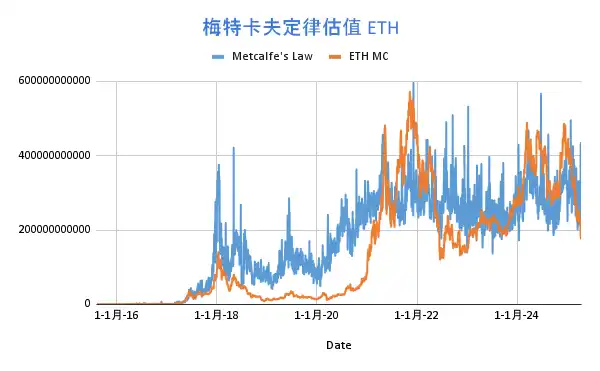
Metcalfe's Law also applies to the valuation of blockchain public chain projects. Western scholars have found that Ethereum's market capitalization is in a logarithmic linear relationship with daily active users, which basically fits the formula of Metcalfe's Law. However, the Ethereum network's market cap is proportional to the user base by N^(1.43), with a constant K value of 3000. The calculation formula is as follows:
V = 3000 * N^1.43
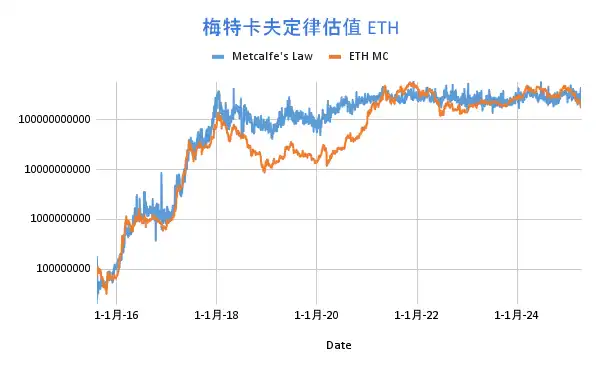
Statistically, there is some correlation between the Metcalfe's Law valuation method and the ETH market cap trend:
Logarithmic trend chart:
Limitation Analysis
Metcalfe's Law has limitations when applied to emerging public blockchains. In the early stages of public chain development, the user base is relatively small, making it less suitable for valuation based on Metcalfe's Law, such as early projects like Solana and Tron.
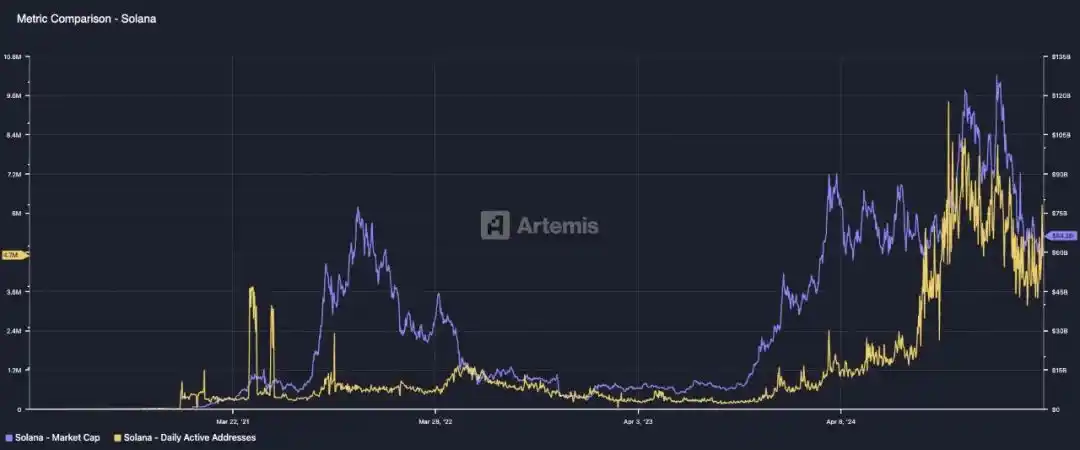
Furthermore, Metcalfe's Law also fails to reflect the impact of staking rates on token prices, the long-term effects of Gas fee burn under the EIP1559 mechanism, and the ecosystem of public chains may engage in games based on the Security Ratio to Total Value Secured (TVS) among other factors.
II. CEX Platform Tokens - Profit Buyback & Burn Model
Model Analysis
Centralized exchange platform tokens are similar to equity tokens and are related to the exchange platform's revenue (transaction fee revenue, listing fees, other financial services, etc.), the development of the public chain ecosystem, and the exchange platform's market share. Platform tokens generally have a buyback and burn mechanism, and may also incorporate the Gas Fee Burn mechanism seen in public chains.
The valuation of platform tokens not only needs to consider the overall platform revenue but also requires discounting future cash flows to estimate the intrinsic value of the platform token. It also needs to consider the token's burn mechanism to measure changes in scarcity. Therefore, the price movement of platform tokens is generally related to the exchange platform's transaction volume growth rate and the platform token's supply reduction rate. A simplified Profit Buyback & Burn Model valuation method calculation is as follows:
Platform Token Value Growth Rate = K * Transaction Volume Growth Rate * Supply Burn Rate (where K is a constant)
BNB Example
BNB is the most classic exchange platform token. Since its inception in 2017, it has received widespread acclaim from investors. BNB's empowerment has gone through two stages:
· Stage One: Profit Buyback - From 2017 to 2020, Binance used 20% of its profits each quarter to buy back and burn BNB tokens;
· Stage Two: Auto-Burn + BEP95 - Starting in 2021, the Auto-Burn mechanism was implemented, no longer based on Binance's profit but on BNB's price and the quarterly block count of the BNB Chain, calculating the burn amount according to a formula. Additionally, there is a real-time burn mechanism called BEP95 (similar to Ethereum's EIP1559). 10% of each block's reward is burned, and as of now, a total of 2,599,141 BNB has been burned through the BEP95 mechanism.
The Auto-Burn mechanism calculates the burn amount based on the following formula:
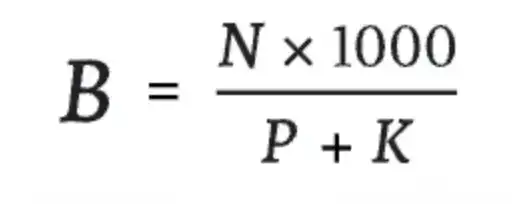
Where N is the quarterly block production of the BNB Chain, P is the quarterly average price of BNB, and K is a constant (initially set at 1000, adjustable through BEP). Assuming a 40% growth rate in Binance's trading volume in 2024 and a 3.5% burn rate of BNB's supply in 2024, with K set as 10:
BNB Price Growth Rate = 10 * 40% * 3.5% = 14%
This means that based on this data, BNB should increase by 14% in 2024 compared to 2023.
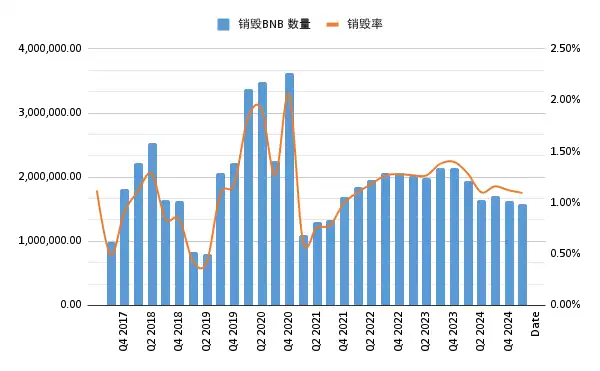
From 2017 to the present, a total of 59.529 million BNB has been burned, with an average quarterly burn of 1.12% of the remaining BNB supply.
Limitation Analysis
When using this valuation method in practice, it is important to closely monitor changes in the market share of the exchange platform. For example, if a certain exchange platform's market share continues to decline, even if its current profitability performance is acceptable, future profit expectations may be affected, thereby reducing the valuation of the platform's token.
Regulatory policy changes also have a significant impact on the valuation of CEX platform tokens, as policy uncertainty may lead to a change in market expectations for platform tokens.
III. DeFi Project — Token Cash Flow Discounted Valuation Method
DeFi projects use the Token Cash Flow Discounted Valuation Method (Discounted Cash Flow, DCF), the core logic of which is to forecast the future cash flow that the token can generate and discount it to its current value at a certain discount rate.
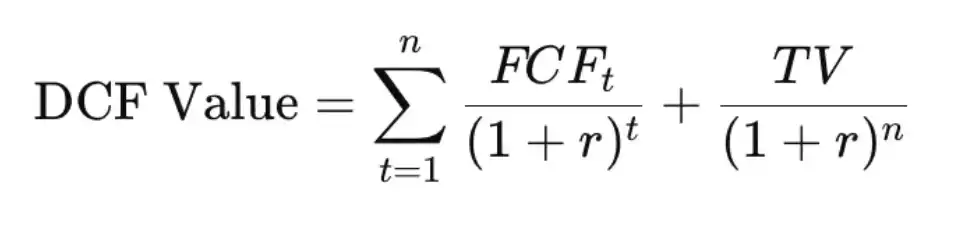
Where FCFt is the free cash flow in year t, r is the discount rate, n is the forecast period, and TV is the Terminal Value. This valuation method determines the current value of a Token by anticipating the future revenue of the DeFi protocol.
Using RAY as an Example
In 2024, Raydium's Revenue was 98.9m. Assuming a yearly growth rate of 10%, a discount rate of 15%, a forecast period of 5 years, perpetual growth rate of 3%, and FCF conversion rate of 90%.
Future Five-Year Cash Flows:
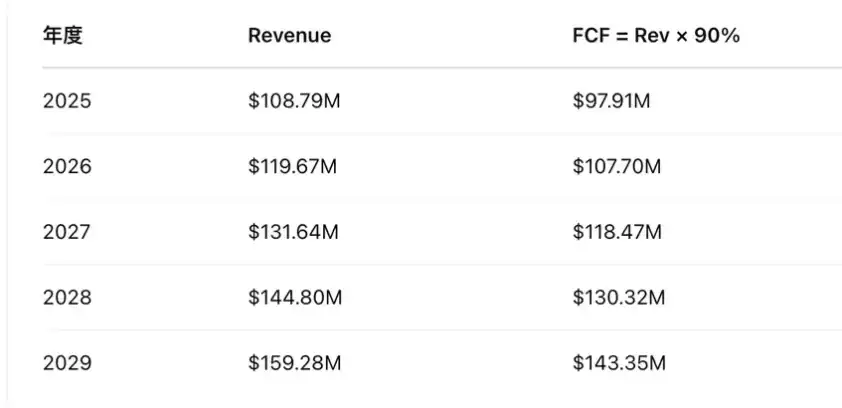
Future Five-Year Discounted FCF Sum: 390.3m
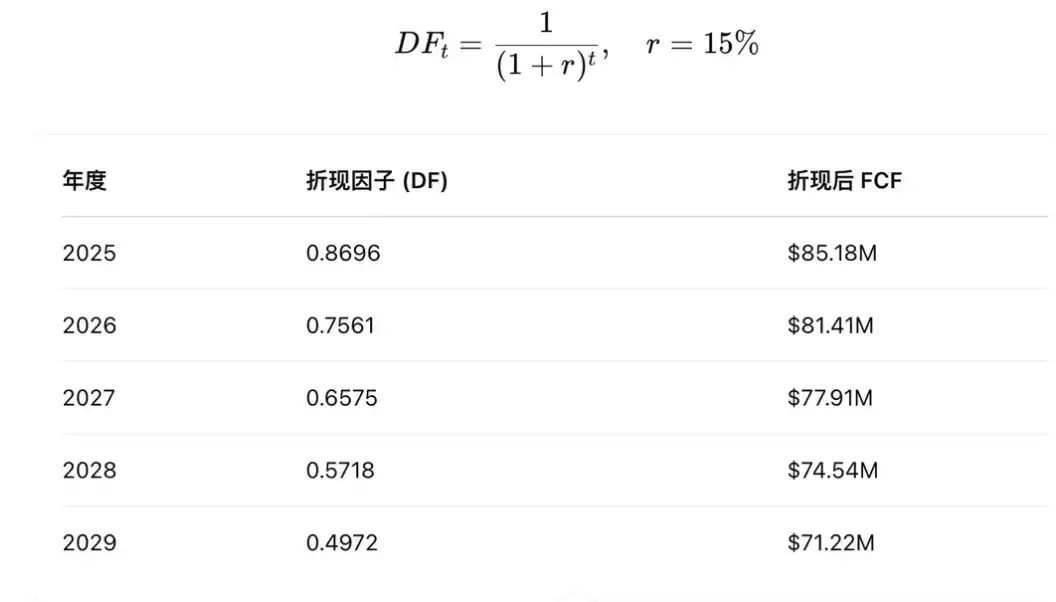
Terminal Value Discounted to 611.6m
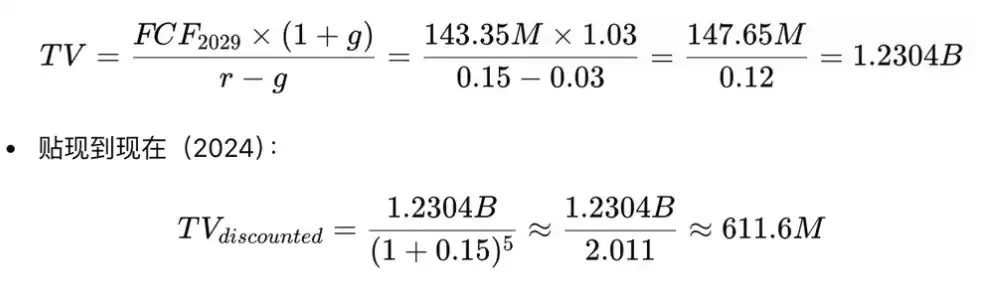
DCF Total Valuation = TV + FCF = 611.6m + 390.3m = 1.002B
RAY's current market value is 1.16B, which is quite close to the overall valuation. Of course, this valuation is based on a 10% annual growth rate over the next 5 years. In reality, Raydium is likely to experience negative growth in a bear market and may see a growth rate higher than 10% in a bull market.
Limitation Analysis
The valuation of DeFi protocols faces several challenges:
One is that governance tokens generally do not capture the protocol's revenue value. To avoid being classified as securities by the SEC, they cannot directly distribute dividends. Although there are mitigation methods (staking rewards, buybacks and burns, etc.), DeFi protocols lack the incentive to feed profits back to the token holders;
Two is that predicting future cash flows is extremely difficult due to rapid market shifts between bullish and bearish conditions, significant cash flow fluctuations for DeFi protocols, and unpredictable competitor and user behaviors;
Three is the complexity in determining the discount rate, which requires a comprehensive consideration of market risks, project risks, and other factors. The choice of different discount rates can have a significant impact on the valuation results;
Four is that some DeFi projects implement profit buyback and burn mechanisms. The implementation of such mechanisms can affect token circulation and value. DeFi tokens with such mechanisms may not be suitable for valuation using discounted cash flow methods.
IV. Bitcoin—Comprehensive Consideration of Multiples Valuation Method
Mining Cost Valuation Method
Statistics show that in the past five years, Bitcoin's price has been lower than the mainstream mining machine's mining cost only about 10% of the time. This fully illustrates the crucial role of mining cost in supporting Bitcoin's price. Therefore, Bitcoin's mining cost can be viewed as the lower limit of Bitcoin's price. Bitcoin's price has only been below the mainstream mining machine's mining cost for a small portion of time, and historically, these have been excellent investment opportunities.
Gold Equivalent Model
Bitcoin is often seen as "digital gold," capable of replacing some of gold's "store of value" function. Currently, Bitcoin's market cap represents 7.3% of the gold market cap. If this ratio were to increase to 10%, 15%, 33%, 100%, the corresponding Bitcoin prices would reach $92,523, $138,784, $305,325, $925,226, respectively. This model is based on the analogy of their store of value properties, providing a macroscopic reference for Bitcoin valuation.
However, Bitcoin and gold still have many differences in terms of physical properties, market recognition, use cases, etc. Gold has become a globally recognized safe-haven asset over thousands of years, with widespread industrial use and physical backing; whereas Bitcoin is a virtual asset based on blockchain technology, with its value stemming more from market consensus and technological innovation. Therefore, when applying this model, it is necessary to fully consider the impact of these differences on Bitcoin's actual value.
Summary
This article aims to advocate for finding valuation models for crypto projects to promote the sustainable development of valuable projects in the industry and attract more institutional investors to allocate to crypto assets.
Especially in bear markets, when the tide recedes, we must use the strictest standards and the simplest logic to find projects with long-term value. Through a reasonable valuation model, just like capturing the "burst of the bubble" Google, Apple in 2000, digging out the "Google, Apple" of the Crypto field in a bear market.
You may also like

SharpLink CEO: How to understand that Ethereum developers have just surpassed 1 million?

Morning Report | MiCA grace period expires on July 1; Kalshi's trading volume in the first week of the World Cup breaks $5.1 billion, setting a record

The foundation of SpaceX's trillion-dollar valuation: Who is dividing Musk's annual capital expenditure of tens of billions?

How to exit after asset tokenization?

The stablecoin positioning battle escalates: When compliance is just a ticket to entry, will USD1 become the biggest winner?

A16Z: The sun bears witness, SpaceX is worth 7.5 trillion

Mergers and acquisitions in the cryptocurrency market are exceptionally active

Concerns Behind the Binance Customer Service Controversy

SpaceX Stock Prediction After the IPO: Can SPCX Reach $200 Before QQQ Inclusion?

Congratulations to Carl Moon on His Historic Ferrari Challenge Le Mans Podium Triumph
Crypto influencer and racing enthusiast Carl Moon finished third in the Ferrari Challenge Le Mans Coppa Shell class, marking his best result of the year. As his racing partner and sponsor, WEEX celebrates this remarkable achievement and continues to lead crypto’s journey beyond boundaries, uniting the innovation of digital assets with the passion of motorsport.
Can the CLARITY Act Become Law by July 4? Everything You Need to Know About the Final Battle

France vs Senegal World Cup 2026: Mbappe’s New Era Begins Against a Historic Rival
What is the connection between Huang Zheng of Pinduoduo and blockchain?

Morning Report | Prediction market platforms like Kalshi and Polymarket jointly sue Kentucky over 14.25% trading tax; Bridgewater founder discusses decision-making in the AI era: principled thinking should run parallel to AI, human insight remains irre...

If the AI bubble has already burst, who will truly remain?

Paul Graham: How to Make a Billion Dollars

After 18 years, blockchain has finally started to head towards the main channel
Claude enforces "facial recognition for household registration," starting in July, no ID card means no access?
SharpLink CEO: How to understand that Ethereum developers have just surpassed 1 million?
Morning Report | MiCA grace period expires on July 1; Kalshi's trading volume in the first week of the World Cup breaks $5.1 billion, setting a record
The foundation of SpaceX's trillion-dollar valuation: Who is dividing Musk's annual capital expenditure of tens of billions?
How to exit after asset tokenization?
The stablecoin positioning battle escalates: When compliance is just a ticket to entry, will USD1 become the biggest winner?
A16Z: The sun bears witness, SpaceX is worth 7.5 trillion


