
Is 2FA Enough to Keep Your Crypto Safe?

 Prefer us on Google
2FA is still one of the most important security settings for any crypto account, exchange login, wallet app, or Telegram-based trading community. But the real question in 2026 is no longer whether you turned it on. It is whether your 2FA method can stand up to phishing, SIM swapping, session theft, and social engineering. Recent guidance from NIST-related industry commentary, Yubico, FIDO Alliance, Auth0, and LoginRadius points in the same direction: 2FA helps, but weaker forms of 2FA are losing ground. This article explains what 2FA really protects, where it falls short, and how crypto users should build a stronger security routine around it.
At a Glance
- 2FA is a useful security layer, especially against stolen passwords and credential stuffing.
- Not all 2FA methods are equal; SMS codes and blind push approvals are now seen as weaker options.
- Phishing-resistant methods such as passkeys and hardware security keys offer much stronger protection.
- Crypto users still need good device hygiene, scam awareness, and strict account habits alongside 2FA.
What 2FA Protects You From (And What It Doesn't)
At its core, 2FA adds a second step after your password. That matters because passwords leak all the time. They get reused, guessed, stolen in database breaches, or captured through fake login pages. If someone has your password but cannot pass the second check, 2FA can stop the attack. For exchange accounts, that can mean blocking unauthorized withdrawals, API access, or account changes. For crypto beginners, this is why enabling 2FA is still far better than relying on a password alone.
But 2FA is not a magic shield. It mostly helps when the attacker only has one piece of the puzzle, usually your password. It is much less effective when the attacker tricks you into handing over the second factor yourself, steals your active session after login, compromises your device, or manipulates a support channel. That distinction matters in crypto because many scams do not “hack” accounts in the classic sense. They pressure users, redirect them to fake sites, or exploit already trusted sessions.
The type of 2FA also matters. Auth0’s NIST-related guidance has long highlighted risks around SMS-based authentication, including malware on phones, SS7-related interception, call forwarding, and phone-number changes. More recent industry analysis also points to SIM swapping as a major weakness for SMS codes. In other words, saying “I use 2FA” without saying which kind is no longer enough.
Common Ways Attackers Try to Get Around 2FA
Most modern 2FA bypass attempts do not rely on breaking the code itself. They rely on breaking the process around it. Adaptive Security identifies several common patterns: push bombing or MFA fatigue, adversary-in-the-middle phishing, session hijacking, SIM swapping, help desk social engineering, and OAuth consent phishing. These patterns show why many successful attacks are really trust attacks.
MFA fatigue and blind approvals
If a service uses push notifications, an attacker may keep triggering login prompts until the user accepts one by mistake. This works best when the approval prompt gives little context or when the user is tired, distracted, or worried that denying a prompt could lock the account. Number-matching push approvals are safer than simple “Approve” buttons, but they still do not offer the same phishing resistance as FIDO-based methods.
SIM swapping and phone-based recovery
SMS 2FA is convenient, but phone numbers are fragile identity anchors. If a criminal convinces a mobile carrier to transfer a number, they may receive account codes meant for the victim. Crypto users should take this seriously because phone numbers are often tied not just to exchange logins, but also to password reset flows, banking apps, and messaging platforms used for OTC trades or support chats.
Session theft after successful login
Some attacks skip the login challenge entirely by stealing a valid session. The knowledge base materials include an example involving macOS malware that could restore Telegram Desktop access from trusted local session data without asking for a phone number, verification code, or Telegram 2FA password. That is a useful reminder: if your device is compromised, 2FA may not save an already authenticated session.
-- Price
Why Phishing Sites Can Still Trick Even 2FA Users
Phishing remains the biggest reason people overestimate 2FA. A fake site does not need to defeat your code mathematically. It only needs to persuade you to type it in at the wrong place.
This is especially relevant in crypto, where fake exchange pages, counterfeit wallet pop-ups, and impersonated support channels are common. The knowledge base notes a 2026 phishing campaign targeting MetaMask users with a fake 2FA process designed to steal wallet recovery phrases. Another case cited by enforcement authorities in India involved a counterfeit Coinbase Pro phishing operation that deceived users into providing 2FA verification and led to roughly $20 million in crypto fraud. Coinbase has also publicly reminded users that it will never ask for 2FA codes, recovery phrases, or password reset links through unofficial support interactions.
The key weakness here is that traditional one-time codes can be relayed in real time. If you enter your password and code into a fake site, the attacker may immediately pass them to the real service and capture the authenticated session. LoginRadius and Adaptive Security both describe this broad pattern. That is why FIDO Alliance and Yubico emphasize phishing-resistant authentication. According to Yubico’s summary of updated NIST guidance, properly implemented synced passkeys can meet AAL2, while device-bound passkeys can support AAL3. FIDO Alliance similarly notes that passkeys can support both AAL2 and AAL3 depending on implementation. The practical takeaway is simple: stronger authentication is now being judged by phishing resistance, not just by the presence of a second step.
Other Security Habits You Should Combine With 2FA
Crypto security works best as a stack, not a single switch. If you trade on exchanges, bridge assets across a blockchain ecosystem, use DeFi apps, or hold tokens with active staking and governance rights, your attack surface is bigger than a basic email account. That means 2FA should sit alongside several other habits.
First, use unique passwords stored in a reputable password manager. Reused passwords remain one of the easiest ways for attackers to pivot from one breach to another. Second, prefer authenticator apps, passkeys, or hardware security keys over SMS when an exchange or wallet service offers them. LoginRadius recommends passkeys, WebAuthn, and security keys as phishing-resistant options, while treating TOTP as more of a transition method than an end state for high-risk accounts.
Third, secure the device itself. Keep your browser, phone, and operating system updated. Avoid installing random extensions, cracked apps, or unsigned wallet tools. In crypto, malware often targets browser sessions, clipboard contents, wallet databases, and seed phrase storage rather than just passwords. That matters whether you are trading perpetuals, tracking tokenomics, or moving funds between spot accounts and self-custody.
Fourth, treat urgency as a red flag. Support impersonation remains one of the most effective scam tactics. If someone says your assets are at risk and asks you to move funds to a “safe wallet,” disable security settings, or read out a verification code, stop. Real platforms do not need your 2FA code to protect your balance.
A Realistic Checklist for Keeping Your Crypto Account Safe
The safest approach is practical, not paranoid. Start by checking what kind of 2FA you actually use. If it is SMS, upgrade if possible. If your exchange supports passkeys or security keys, that is the stronger long-term option. If only authenticator app codes are available, that is usually a better choice than text messages for most users.
| Security Layer | Better Practice | Why It Matters |
|---|---|---|
| 2FA method | Passkey, WebAuthn, or hardware security key | Better protection against phishing and real-time relay attacks |
| Fallback option | Avoid SMS when stronger methods exist | Reduces SIM swapping and interception risk |
| Password | Unique, stored in a password manager | Blocks credential stuffing across exchanges and apps |
| Device security | Updates, clean browser, limited extensions | Helps prevent malware and session theft |
| Support verification | Use only official in-app or official site channels | Reduces phishing and impersonation risk |
It also helps to separate your crypto activities. Use one email for exchanges, another for newsletters, and avoid linking every account to the same phone number if you have alternatives. If you manage larger balances, active DeFi positions, or high trading volume, consider a dedicated device for sensitive logins. That may sound excessive for a beginner, but the principle is simple: fewer shared points of failure mean fewer easy paths for attackers.
Finally, remember that 2FA does nothing for bad on-chain approvals. If you connect a wallet to a malicious dApp, sign a harmful transaction, or approve token spending you do not understand, 2FA on your exchange account will not help. Crypto risk lives both on the account side and on the wallet-signing side.
So, is 2FA enough to keep your crypto safe? No, but it is still necessary. Think of 2FA as the seat belt, not the whole car. It can save you from common account takeover attempts, but it cannot replace phishing-resistant login methods, clean devices, careful transaction signing, and basic scam discipline. In crypto, the strongest users are not the ones with the most complicated setup. They are the ones who understand where each layer works and where it does not.
DISCLAIMER: WEEX and affiliates provide digital asset exchange services, including derivatives and margin trading, only where legal and for eligible users. All content is general information, not financial advice-seek independent advice before trading. Cryptocurrency trading is high risk and may result in total loss. By using WEEX services you accept all related risks and terms. Never invest more than you can afford to lose. See our Terms of Use and Risk Disclosure for details.
This content is provided for general informational purposes only and doesn't constitute financial, investment, legal, or tax advice. Any events, rewards, online promotions, or related information mentioned herein should not be considered a recommendation, solicitation, or invitation to purchase, sell, trade, or otherwise deal in any crypto assets. Crypto assets are highly volatile and may result in loss. The availability of WEEX services, products, and related events may vary by region. You are responsible for ensuring that your participation is in accordance with applicable local laws and regulations.
You may also like

What Is Based (BASED)? The Hyperliquid Super App Token Explained
XST Is Not a Stock: What XSolut Actually Is and How to Buy It Correctly
Deutz Stock (DEZ): The 24 August 2026 Extraordinary General Meeting, the FFG Share Issue and What the Resolution Says
ETHFI vs MANTA vs ZK: Which Upcoming Token Unlock Has the Largest Supply Impact?
Fasttoken's $91 Million Unlock Arrives August 18: Who Receives the FTN Tokens?
Manta Network (MANTA) Token Unlock: Supply Details, Allocation Breakdown and Price Risks
Why Is the Pakistan Stock Market Rising Today? KSE-100 Extends Its Yearly Gains
ETHFI Price Today: Why Ether.fi Is in Focus Ahead of Its Token Unlock
BBVA Stock Price Prediction 2026-2027: Can Spain's Second Bank Keep Climbing
Santander Reveals a $4.3 Million Bitcoin Investment: What Europe's Biggest Bank Buying IBIT Actually Signals
SNDK Stock and the $93.9 Billion NBM Agreements: What SanDisk's New Business Model Actually Changes
Where to Buy XST Coin: Which Exchanges and DEXs List XSolut in 2026

Is Santander Stock a Buy After Its Strongest First Half Ever? What Record EUR 3.8 Billion Profit Actually Implies
Santander Stock and the Webster Acquisition: What the Federal Reserve Approval Actually Changes
What Is IREN? How the AI Data Center Company Behind Microsoft's $9.7 Billion Contract Actually Works
IonQ Stock Q2 2026: What 287% Revenue Growth and a $1.87 Billion Net Loss Actually Tell Investors
What Is Crypto Institutional Trading? How Professional Traders and Fund Managers Access Markets Differently
How to Monetize a Crypto Trading Community in 2026: What the Broker API Model Actually Changes
Zhipu, Z.ai and GLM: One Company, and Which Name Is Actually on the Ticker
SPCX Stock Price Target Raised to $450 by Arete Research: What the Upgrade After the Cursor Deal Actually Means
What Is Prom (PROM)? The Polygon CDK Chain, the Token and Where It Trades
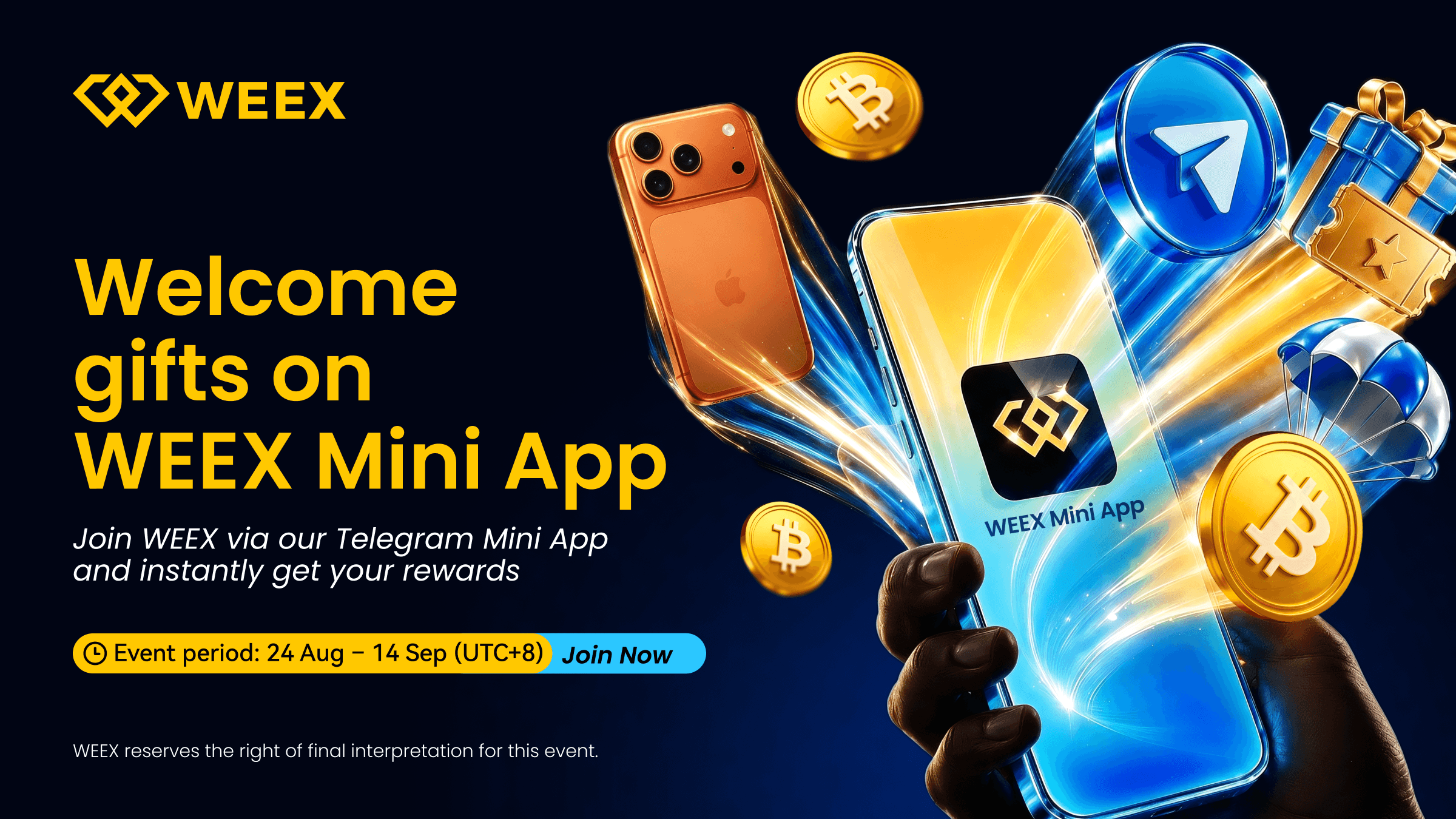
What Is WEEX Telegram Mini App? Features, Benefits, and How to Get Started
Opendoor Stock Falls 10% After Missing Q2 Estimates: What the EPS Surprise Actually Means
Marvell Stock Jumps 13% on AI Memory Infrastructure Upgrades: What the New Portfolio Actually Changes
Form 1099-DA Explained: A 2026 Filing Season Guide for Crypto Traders
Why Your Coinbase or Kraken 1099-DA Might Be Wrong (And What to Do)
Cost Basis Gap in Form 1099-DA: How to Avoid an IRS CP2000 Notice
From UFC to F1: How Crypto Exchanges Are Buying Sports Sponsorships
What Is a Crypto Broker API? How Platforms Embed Trading Without Building an Exchange
What Is WEEX Broker? How the Program Works and Who It Is For
What Is Based (BASED)? The Hyperliquid Super App Token Explained
XST Is Not a Stock: What XSolut Actually Is and How to Buy It Correctly
Deutz Stock (DEZ): The 24 August 2026 Extraordinary General Meeting, the FFG Share Issue and What the Resolution Says
ETHFI vs MANTA vs ZK: Which Upcoming Token Unlock Has the Largest Supply Impact?
Fasttoken's $91 Million Unlock Arrives August 18: Who Receives the FTN Tokens?
Manta Network (MANTA) Token Unlock: Supply Details, Allocation Breakdown and Price Risks


